This week: AI-triggered drone launches before ground units roll, scientists becoming wildland firefighters to study cancer, the first national PFAS blood profile across 550 volunteers, and a first-of-its-kind U.S. study finding toxic brominated flame retardants in turnout gear at even higher levels in "PFAS-free" sets. Plus a hydraulic forcible entry tool that replaces an entire breaching kit and what a Rochester collapse drill settled about spreaders versus airbags for pulling out a trapped firefighter.
AI · DRONES · DISPATCH
Fairfax County Wires AI Into 911 Calls to Launch Drones Before Units Dispatch
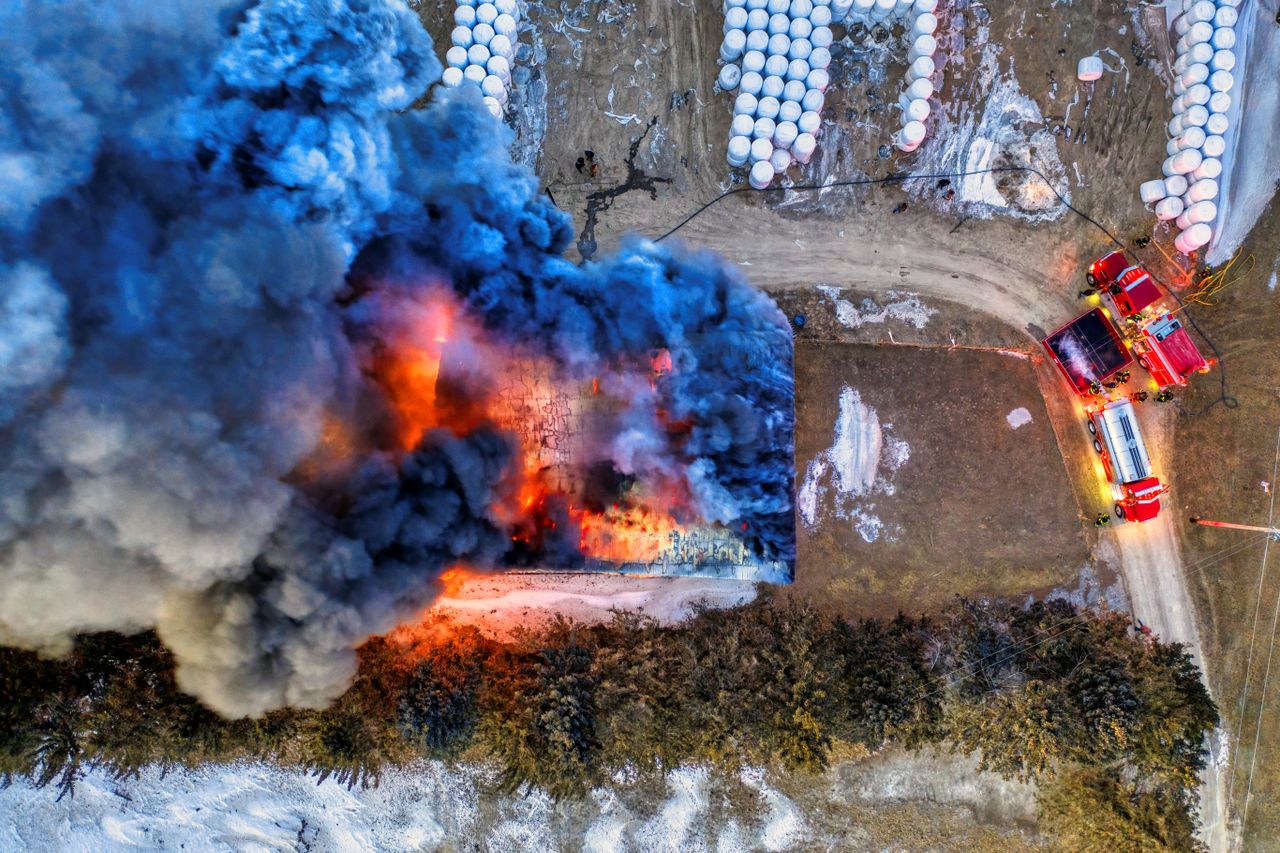
The Fairfax County Police Department's Real Time Crime Center, in partnership with Fairfax County Fire and Rescue, has deployed an AI system that continuously transcribes 911 calls as they come in and cross-references them against the county's dispatch protocols in real time. When the system flags a qualifying incident, it immediately alerts RTCC personnel - enabling a drone to be launched while dispatchers are still gathering information and before ground units have even rolled.
The technology, which includes Axon's Prepared platform, also allows callers to voluntarily share live video, photos, or their location through a secure link - giving incident commanders aerial and caller-provided intelligence simultaneously. Fairfax County Fire and Rescue personnel are now permanently assigned to the RTCC as part of a long-term pilot, marking a structural shift in how fire and police coordinate on the front end of a response.
The take: Most departments treat drones as a resource to dispatch after the call - Fairfax County just built a system that gets the drone in the air during the call. The structural piece matters as much as the tech: permanently embedding fire personnel in the crime center means fire and police see the same real-time picture from the first second.
Read the full story at Fairfax County PD News →
CANCER · RESEARCH · WILDLAND
University of Miami Researchers Are Becoming Wildland Firefighters to Study Cancer Risk
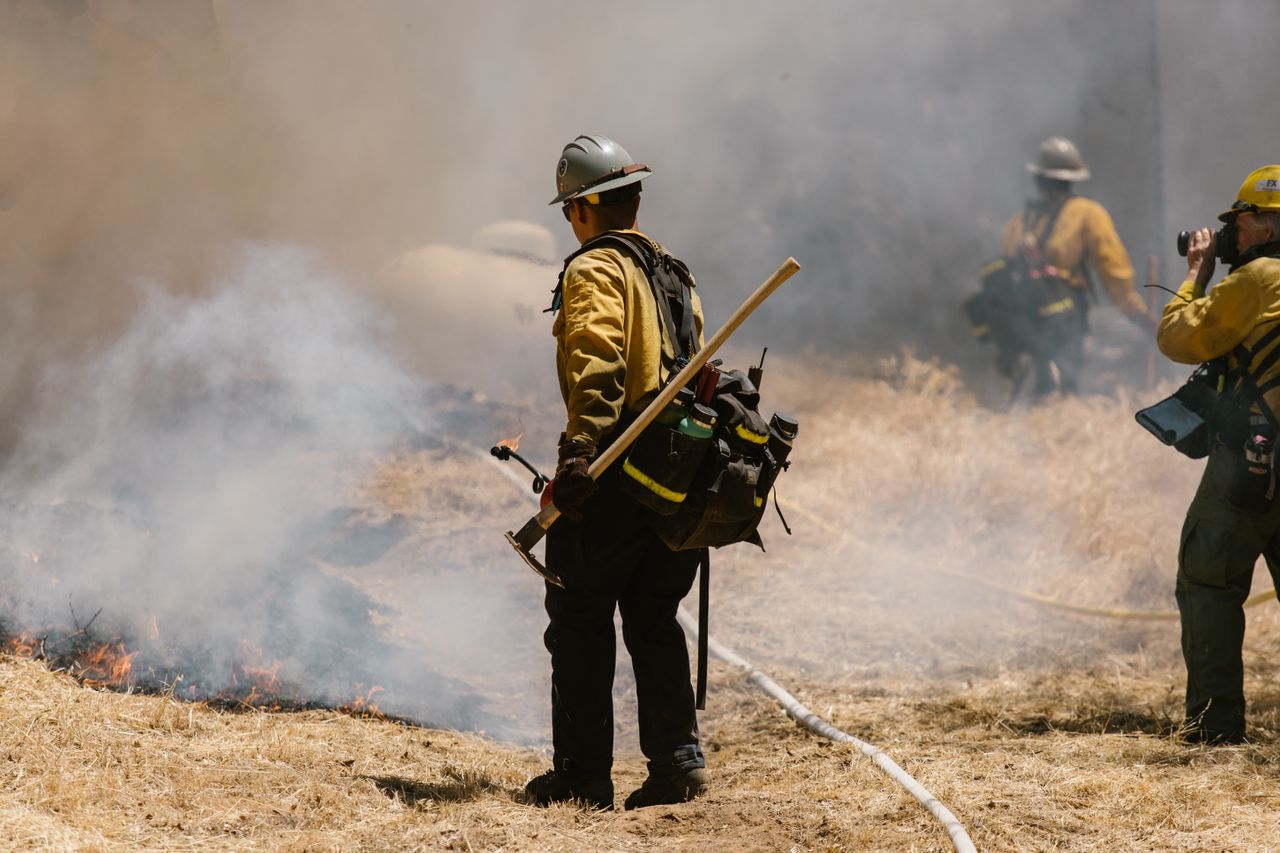
Scientists from the Sylvester Comprehensive Cancer Center at the University of Miami completed wildland firefighter training alongside Florida Forest Service cadets - not to fight fires, but to understand the exposures that cause cancer in the people who do. The hands-on immersion is directly shaping the WISER study, a next-generation research effort that will collect environmental and biological samples from wildland firefighters during actual prescribed burns.
WISER will use environmental monitoring, biological sampling, and epigenetic analysis to build a comprehensive exposure map that existing studies - conducted only in labs - have been unable to produce. Earlier Sylvester work validated a wipe test that detected PFAS on every single set of firefighter gear tested, and the new study extends that work into the field at the moment of actual exposure.
The take: This is the right direction. Lab-only cancer studies miss what actually happens on a fire line - the heat, the layering decisions, the gear contact sequence. WISER closes that gap by building the study around real-world conditions from the ground up. What they find will be harder to dismiss than any instrument-only protocol.
Read the full story at MedicalXpress →
CANCER · PFAS · RESEARCH · VOLUNTEER
First National Study Maps PFAS Blood Profiles Across 550 Volunteer Firefighters in 9 States
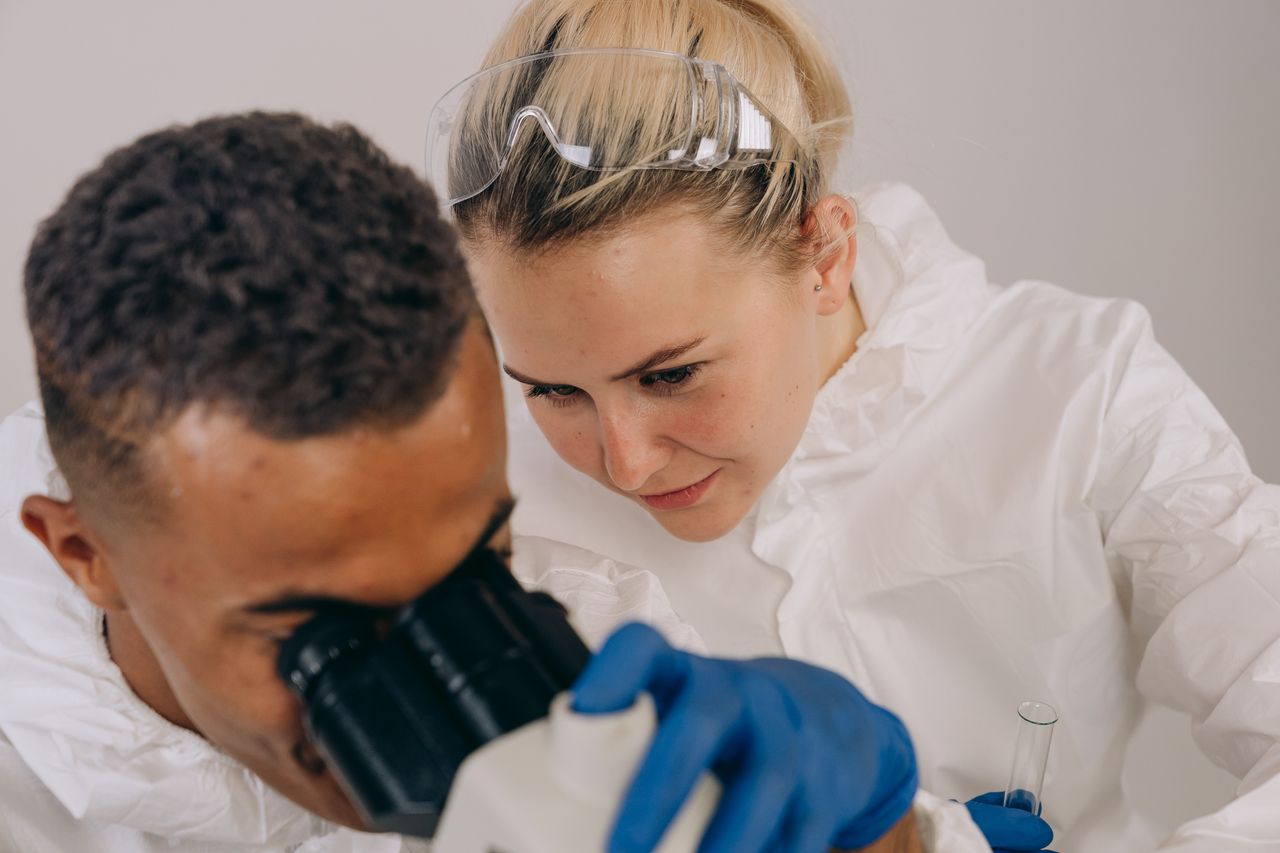
A new study published in the American Journal of Industrial Medicine quantified 12 different PFAS compounds in the blood of 550 active volunteer firefighters from 9 states - the first time serum PFAS profiles in the volunteer population have been systematically characterized at national scale. Volunteers make up 65 percent of the US fire service, but virtually all prior PFAS research has focused on career departments.
The findings show that PFAS profiles vary significantly by geography, age, and sex - and that both occupational factors and broader community-level exposures (water sources, regional industrial activity) contribute to the body burden. Sex-stratified analysis found different exposure and elimination patterns between male and female volunteers, suggesting one-size-fits-all decontamination protocols may not be adequate.
The take: Two-thirds of US firefighters are volunteers and until now they were a research blind spot on PFAS. This study changes that - and the geographic and sex-based variation in the data means the answer is not a uniform national protocol but targeted interventions by region, role, and biology.
Read the full study at PubMed →
TURNOUT GEAR · PFAS · CANCER · CHEMICALS
First U.S. Study Finds Toxic Brominated Flame Retardants in Turnout Gear at Higher Levels in "PFAS-Free" Sets
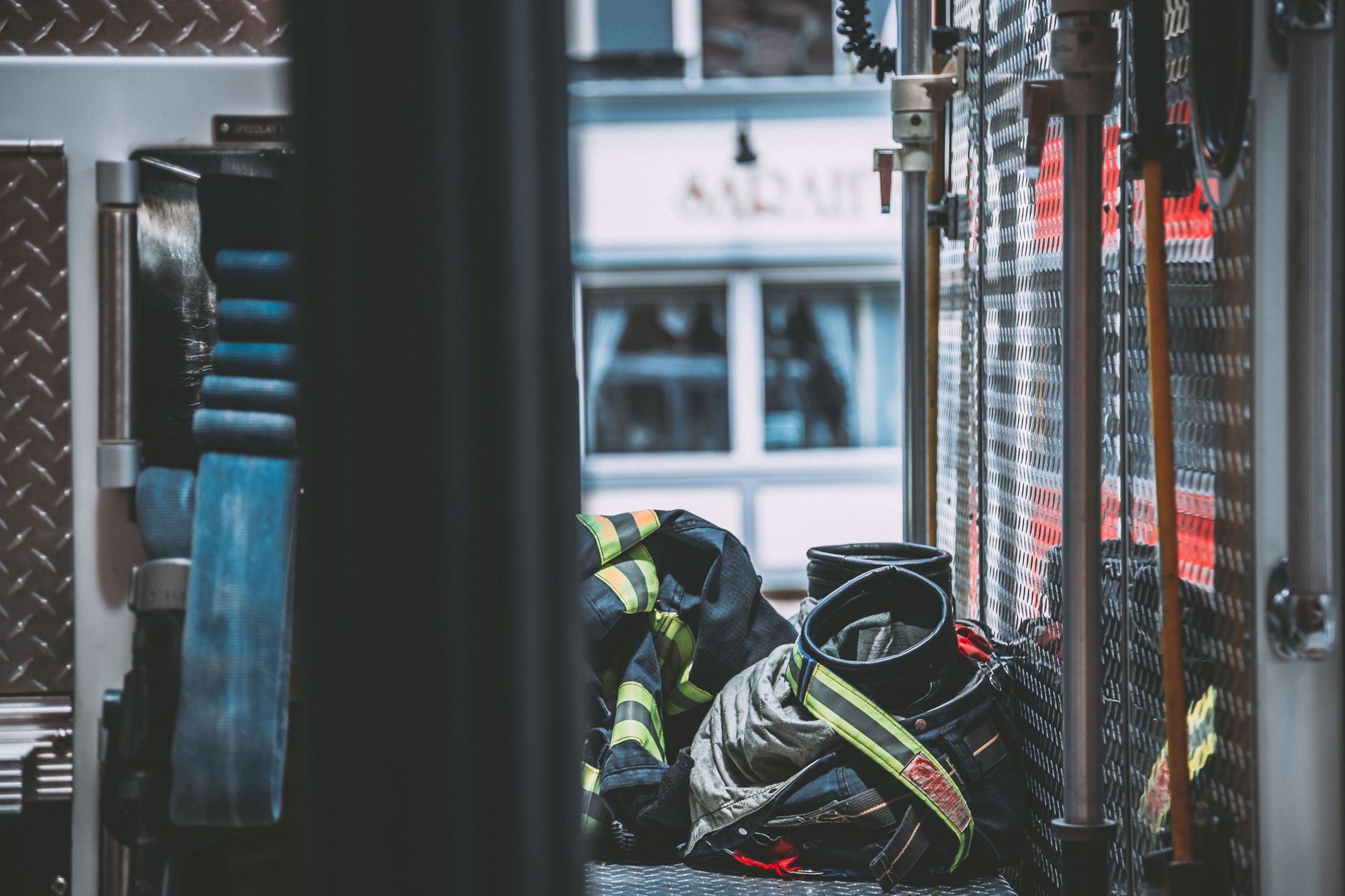
A new study published in Environmental Science & Technology Letters is the first in the U.S. to formally document brominated flame retardants in firefighter turnout gear. Led by Duke University's Heather Stapleton with North Carolina State University's Wilson College of Textiles and the International Association of Fire Fighters, the team analyzed nine used gear sets made between 2013 and 2020 and three 2024 sets marketed as non-PFAS treated, testing each layer for what could leach out during use.
Every set tested contained brominated flame retardants, with extractable levels generally higher than PFAS. The highest concentrations turned up in the gear marketed as PFAS-free, concentrated in the moisture barrier, suggesting manufacturers swapped in the flame retardants to hit flammability requirements. The dominant compound, DBDPE, shares properties with decaBDE, a chemical largely phased out globally over toxicity concerns and linked in one study to thyroid disease.
The take: "PFAS-free" does not mean chemical-free, and this is the first hard data showing the replacement may carry its own risks. With multiple states banning PFAS-treated gear starting in 2027, departments about to spend on new turnout gear should be asking manufacturers exactly what is in the non-PFAS treatment before they buy, not after.
Read the full story at ScienceDaily →
FORCIBLE ENTRY · TOOLS · EXTRICATION · INNOVATION
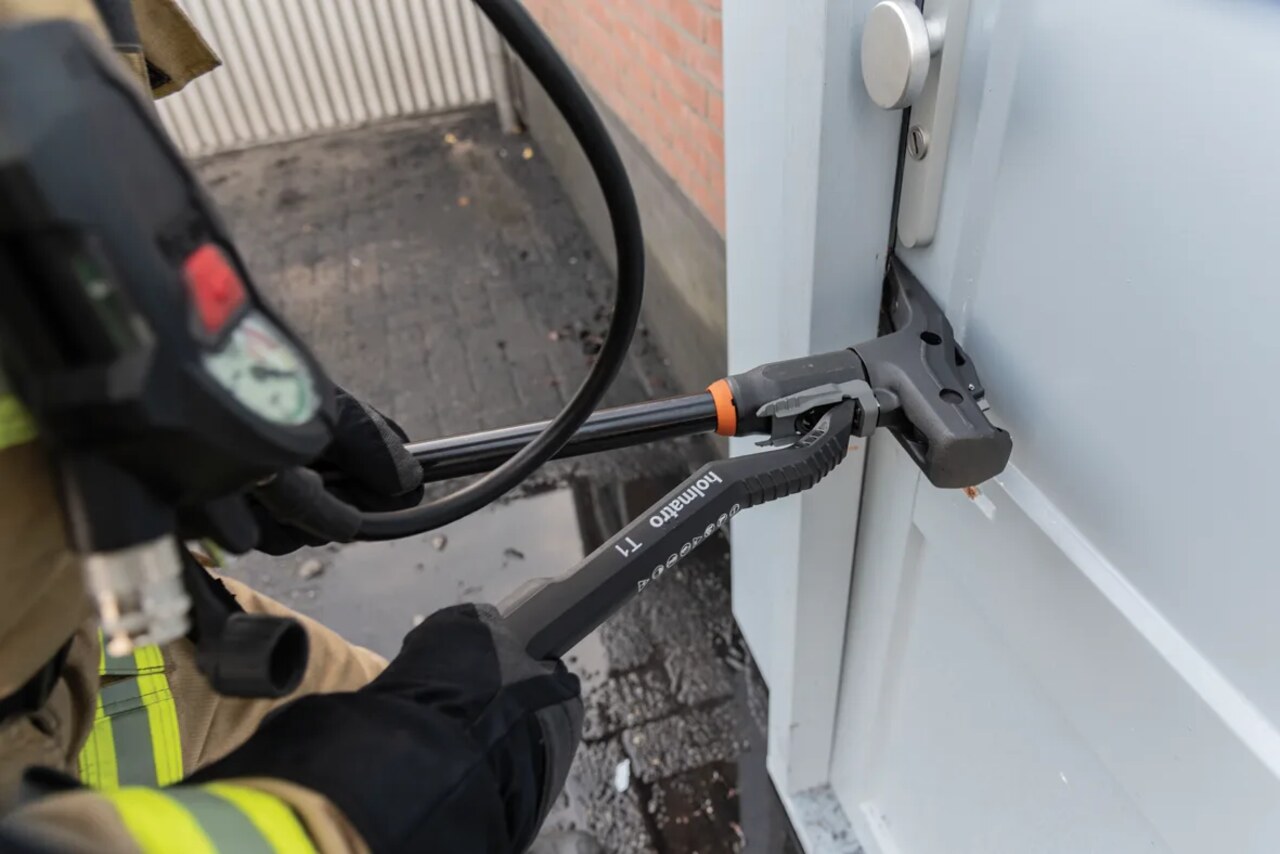
Holmatro's New T1 Is the First Hydraulic Forcible Entry Tool That Cuts, Wedges, Rams, Spreads, Hammers, and Lifts in One Unit
Holmatro unveiled the T1 Forcible Entry Tool at Interschutz 2026, the world's largest fire and rescue trade show, describing it as the only hydraulic forcible entry tool on the market that combines six functions into a single hand-operated unit: cutting, wedging, ramming, spreading, hammering, and lifting. It shipped alongside the company's Next-Gen Pentheon battery-powered cutter/spreader/ram line and a compact OmniShore shoring system, all debuted at the same show.
The pitch is consolidation. Crews doing forcible entry today typically carry a Halligan, a flathead axe, a set of wedges, and sometimes a hydraulic ram or K-tool separately. The T1 is built to replace that whole kit with one hydraulic tool a single firefighter can operate, aimed at departments trying to cut the number of separate hand tools riding on the rig without cutting capability. It runs on a two-stage manual hydraulic pump, no battery required, generating up to 31,248 lbf of cutting force and 7,419 lbf of spreading force at 17 lbs.
The take: A six-function hydraulic tool is either the next standard forcible entry kit or a heavier, more expensive halligan replacement that never leaves the rig; the way to find out is to get hands on it before your department budgets for the whole line. If your truck company is already tight on tool space, this is worth a demo request from Holmatro before your next apparatus spec cycle.
Read the full story at Holmatro USCA →
EXTRICATION · TOOLS · TRAINING · RESCUE
Rochester Fire Department's Structural Collapse Drill Ranked Spreaders Over Airbags for Trapped-Firefighter Rescue
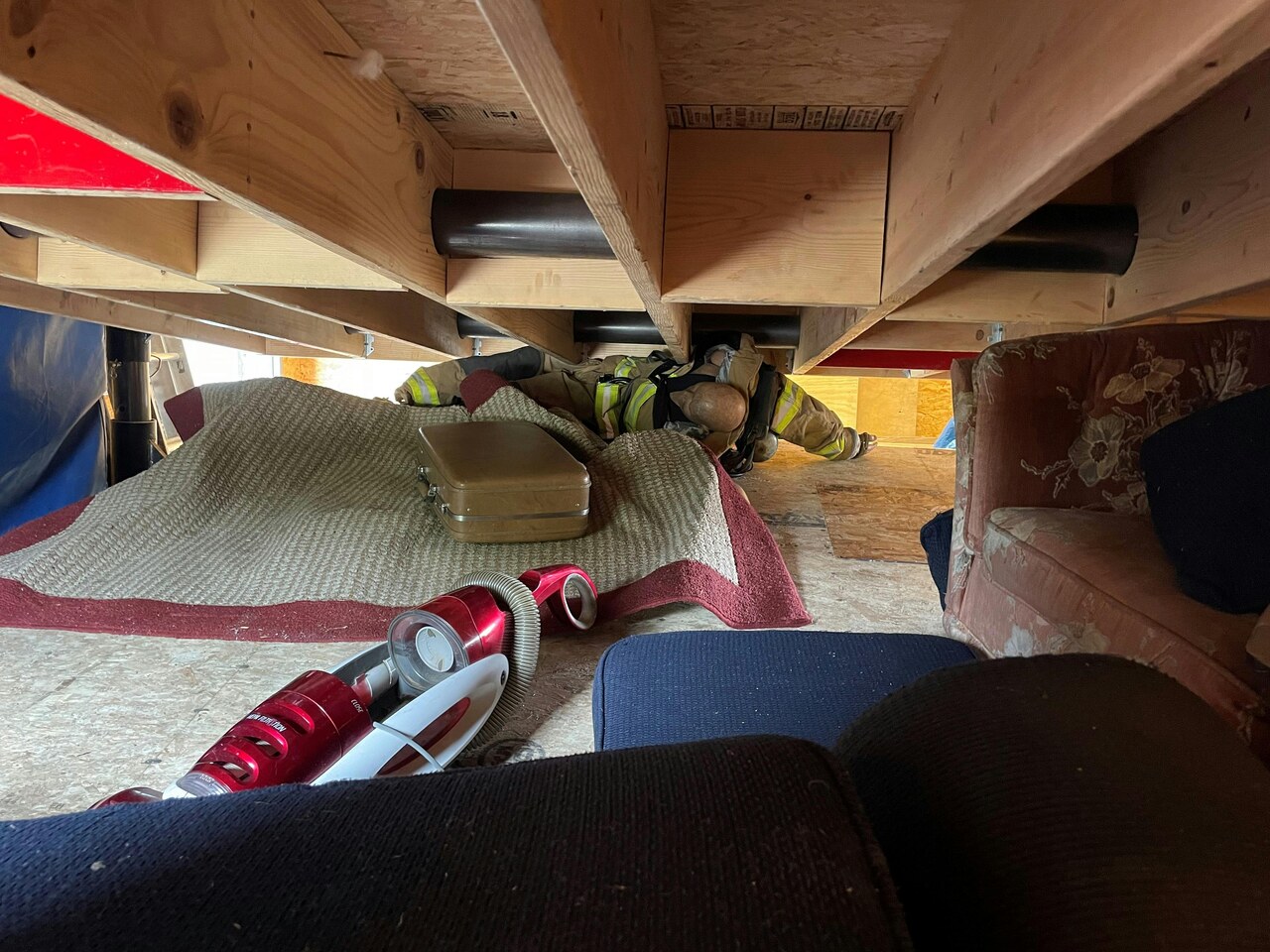
Rochester, NY Fire Department's Technical Rescue Team ran a structural collapse drill specifically to rank rescue tool preference for pulling a trapped firefighter out of collapse debris, and the consensus that came out of it was clear: spreaders first, bottle jacks second, medium-pressure rescue cushions third. That ordering runs against the instinct many crews have to reach for air bags first because they are simpler to stage.
The drill also produced a tactical correction to standard doctrine. The textbook teaches "lift an inch, crib an inch" for heavy lifting in a collapse, but most participants in the Rochester drill concluded that in an actual firefighter-down scenario, the priority shifts: make the lift and simultaneously assign rescuers to pull the victim to safety as fast as possible, rather than cribbing incrementally the way you would for a stable void.
The drill also surfaced a second finding worth training on directly: multiple participants hit low-air alarms while operating in the confined collapse space, reinforcing that rapid personnel relief during a structural collapse rescue is not optional, it is baked into how the operation has to be staffed.
The take: This is a live-fire-department field test producing a specific tool-order recommendation for the single worst rescue scenario your department will train for, not a manufacturer's marketing claim. Bring the spreaders-first ordering and the lift-and-pull adjustment to your next confined space or collapse rescue drill and see if your crew's instinct matches Rochester's.
Read the full story at Firehouse →
WHAT WE'RE WATCHING
Whether RTCC-embedded fire staffing and AI-triggered DFR becomes an IAFC model or spreads to mutual aid structures nationally (the Fairfax County structure marks a new tier of inter-agency integration, not just a tech pilot).
Follow-up CAPS data on whether decontamination protocols reduce PFAS in volunteer cohorts as they do in career populations (the volunteer blood-profile variance suggests the answer might be geography- and sex-dependent, not a uniform yes).
Whether OmniShore, the compact six-strut shoring system Holmatro debuted alongside the T1 at Interschutz, gets a public US field trial - collapse and vehicle stabilization crews are the next test of the same consolidation trend.