This week inside the Brief:
- Ambulances now run at speeds AI can predict, and FDNY proves it works in West Harlem
- A university just solved the hardest part of wildfire season: who gets the crews
- New federal tariffs just doubled the cost of every thermal drone in the fire service — here is what it means for your department
- Station culture, not gear, determines if firefighters actually adopt cancer prevention
- A fire captain built the hazmat reference app WISER should have been — and it's free
- FDNY's 25-year health report: 600+ firefighter deaths from WTC illness, cancer in 1 of 4
AI / EMS / DISPATCH
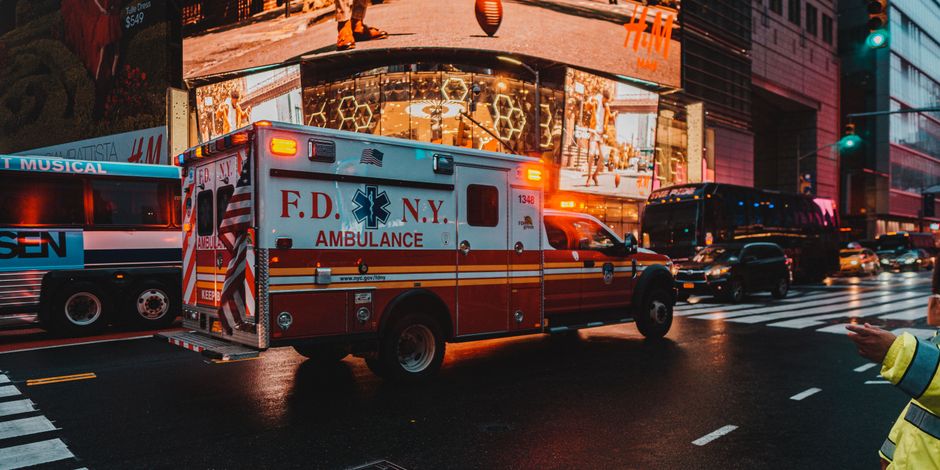
NYU And FDNY Build A Digital Twin To Predict Ambulance Speeds
Researchers at NYU Tandon, working with the New York City Fire Department and Tandon's C2SMART transportation center, built a high fidelity traffic digital twin of West Harlem and Morningside Heights, FDNY's M6 dispatch zone. The simulation combines detailed traffic modeling with real GPS data from nearly 1,000 FDNY ambulance responses in 2023, then trains an AI model called EMVAID to predict how fast an ambulance will actually move down a given road segment with lights and sirens on.
The project exists because ordinary navigation tools fail for emergency vehicles. Google Maps and similar tools assume vehicles obey stoplights and stay in lane, but ambulances run red lights and depend on other drivers noticing and yielding, so their real travel speeds do not match normal traffic predictions. FDNY's average medical response time climbed nearly 32 percent between 2015 and 2023, from about 10.4 minutes to 13.7 minutes, which is the pressure driving the search for better tools.
The payoff is that FDNY can now test dispatch and routing strategy changes inside the simulation before touching a single real intersection, letting a department separate ideas that would actually help from ones that only look good on paper.
The take: This is the kind of infrastructure investment that never makes a department's highlight reel but directly determines whether the next routing change actually saves minutes or just moves the same delay somewhere else.
Read the full story at TechXplore →
AI / WILDFIRE / RESOURCE ALLOCATION
University Of Washington Builds An AI To Triage Simultaneous Wildfires
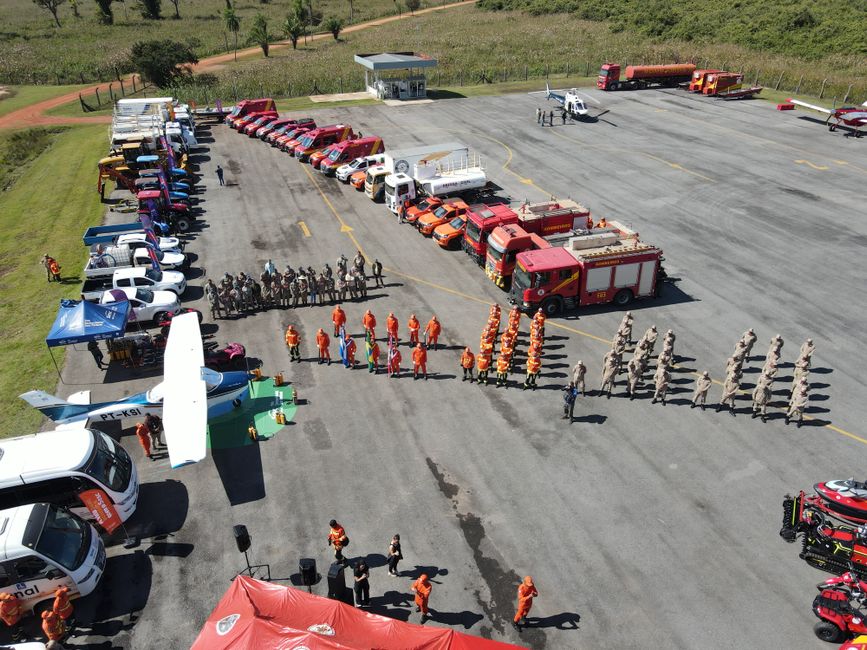
A University of Washington research team led by Foster School of Business professor Leonard Boussioux, working with MIT Sloan's Alexandre Jacquillat, has built a machine learning and optimization framework meant to answer the hardest question in an active fire season: which fire gets the crews when several are burning at once. The preprint, posted to arXiv and now under review at the journal Operations Research, jointly optimizes hotshot crew assignments and multi-fire suppression using a two sided branch and price and cut algorithm on a time space rest network.
The predictive half of the system uses double machine learning to forecast how a fire's spread will change under different crew assignment levels, making rolling two week ahead forecasts. The prescriptive half then solves a large scale integer optimization problem to recommend actual crew routing across every active fire, tested against historical allocation decisions from the US fire management system.
The researchers are explicit that the tool is meant to inform incident commanders, not replace them. But the underlying method, jointly modeling fire behavior and resource allocation instead of treating them separately, is a first according to the authors, and it is aimed squarely at the exact bottleneck that breaks down during synchronous wildfire outbreaks.
The take: The value here is not another fire detection tool, it is the first serious attempt to mathematically solve the triage problem chiefs already face every bad fire season: too many fires, not enough crews, no good way to compare tradeoffs fast.
Read the full story at arXiv →
POLICY / DRONES / BUDGET
New Federal Tariffs Just Doubled The Cost Of Every Thermal Drone In The Fire Service
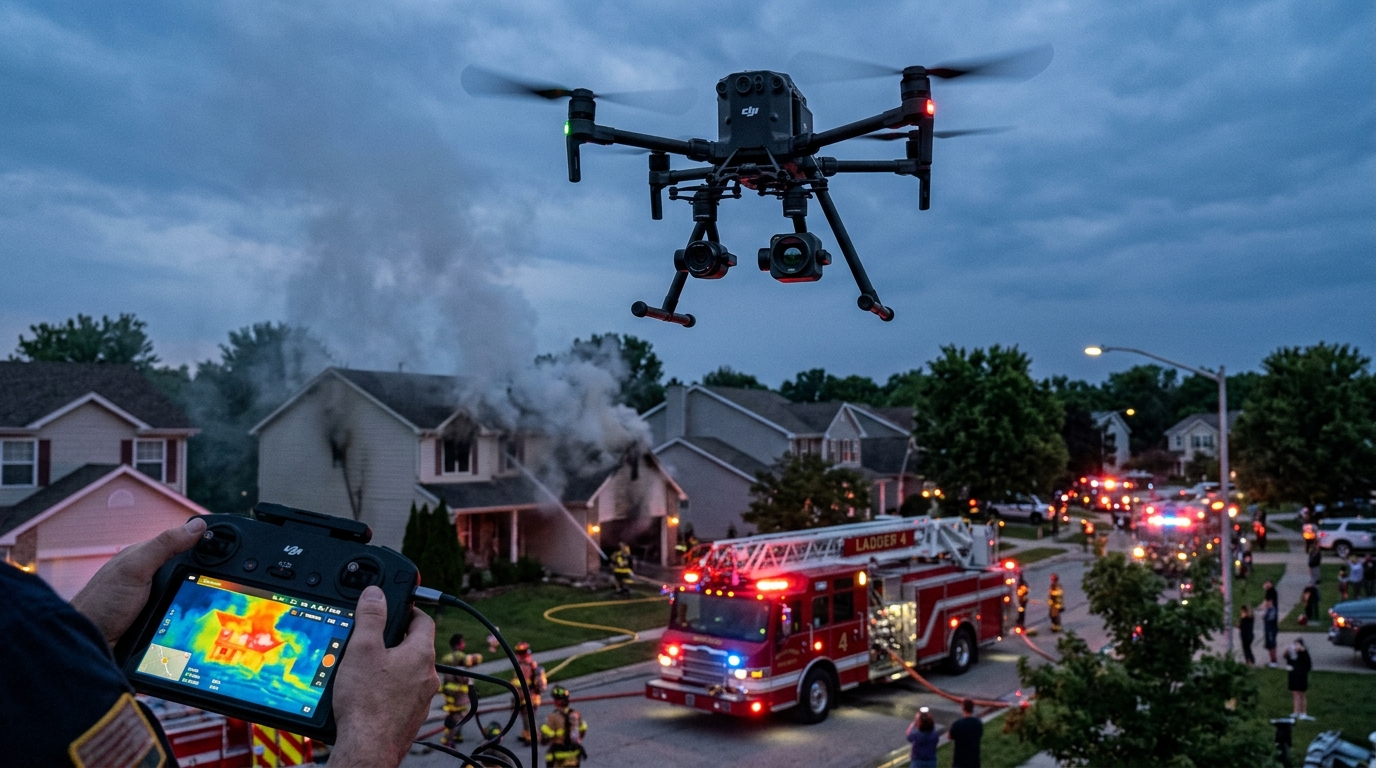
A 100 percent tariff on all thermal-imaging drones took effect September 3, 2026, under a Section 232 proclamation signed by President Trump on August 13. The rate applies to any drone equipped with thermal imaging regardless of weight or size, which means the DJI Mavic 3T, the DJI Matrice 30T, and every other thermal platform departments currently fly all fall into the highest tariff tier. A separate 25 percent rate covers smaller civilian drones without thermal capability, and a third tier hitting propellers, rotors, and components takes effect February 2027.
The practical impact is immediate. The Mavic 3T retails around $6,700 and the Matrice 30T around $10,000. The DJI Dock 3 autonomous docking station used in Drone as First Responder programs runs approximately $15,890. All now face import duties that double their cost. The nearest domestic alternative is the Skydio X10 at $15,000 to $20,000 for a complete thermal package, two to three times current DJI pricing. More than 1,000 agencies hold FAA waivers for DFR programs and over 80 percent of them fly DJI equipment. The FCC added DJI to its Covered List in December 2025, blocking new models from import authorization, so existing US stock is the only pipeline and it is drawing down.
Companies on the Pentagon's Blue UAS Cleared List received a 180-day deferral, pushing their tariff clock to approximately March 2027. Allied nations including the EU, Japan, South Korea, and Taiwan qualify for a reduced 15 percent rate, and the UK qualifies for 10 percent, but only if hardware originates substantially from those countries. For departments with thermal drone purchases in the pipeline, the window to buy at pre-tariff pricing depends entirely on how long distributor inventory lasts.
The take: If your department has a thermal drone purchase in next year's budget, move it up. Pre-tariff inventory is finite, the domestic alternative costs two to three times more, and there is no timeline for relief. Departments that have not yet started a drone program just lost the most affordable entry point the market has ever offered.
Read the full story at Euronews →
HEALTH / CANCER / CULTURE
UC Riverside Study Finds Culture Not Rules Changes Cancer Prevention
A study led by UC Riverside sociology doctoral student Justin Huft, based on 48 interviews with firefighters across Northern and Southern California, found that cancer prevention habits only take root when the underlying status culture of a firehouse changes, not simply when new safety mandates or information arrive. The research, published in the journal Social Science and Medicine, examined five California fire departments as case studies of change taking hold despite firefighting's traditionally risk-tolerant culture.
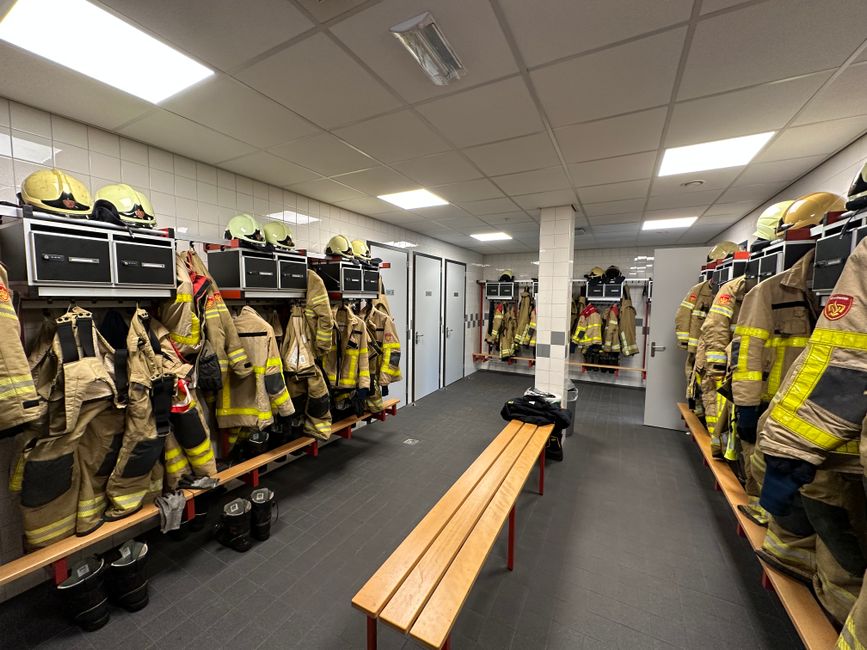
For decades, a soot caked helmet and grimy turnout gear signaled toughness and experience, a practice researchers say is linked to real harm. One study participant noted that firefighters who treated dirty gear as a badge of honor were more than twice as likely to engage in behaviors that increased carcinogen exposure. The researchers identified three intertwined shifts needed for lasting change: cancer prevention becoming core professional knowledge taught at the academy level, clean gear becoming a marker of professionalism rather than excessive caution, and station social dynamics being redirected to reinforce the new norms instead of the old ones.
The researchers found that no single lever was sufficient on its own. Equipment upgrades and screenings without a cultural shift in what confers status inside the firehouse left the old behaviors intact, since old symbols of toughness could still override new information.
The take: This reframes cancer prevention as an organizational culture problem, not a gear or policy problem, which means departments buying better PPE without addressing station status culture are solving the wrong half of the equation.
Read the full story at MedicalXpress →
TECH / HAZMAT / TOOLS
A Fire Captain Built The Hazmat Reference App WISER Should Have Been — And It's Free
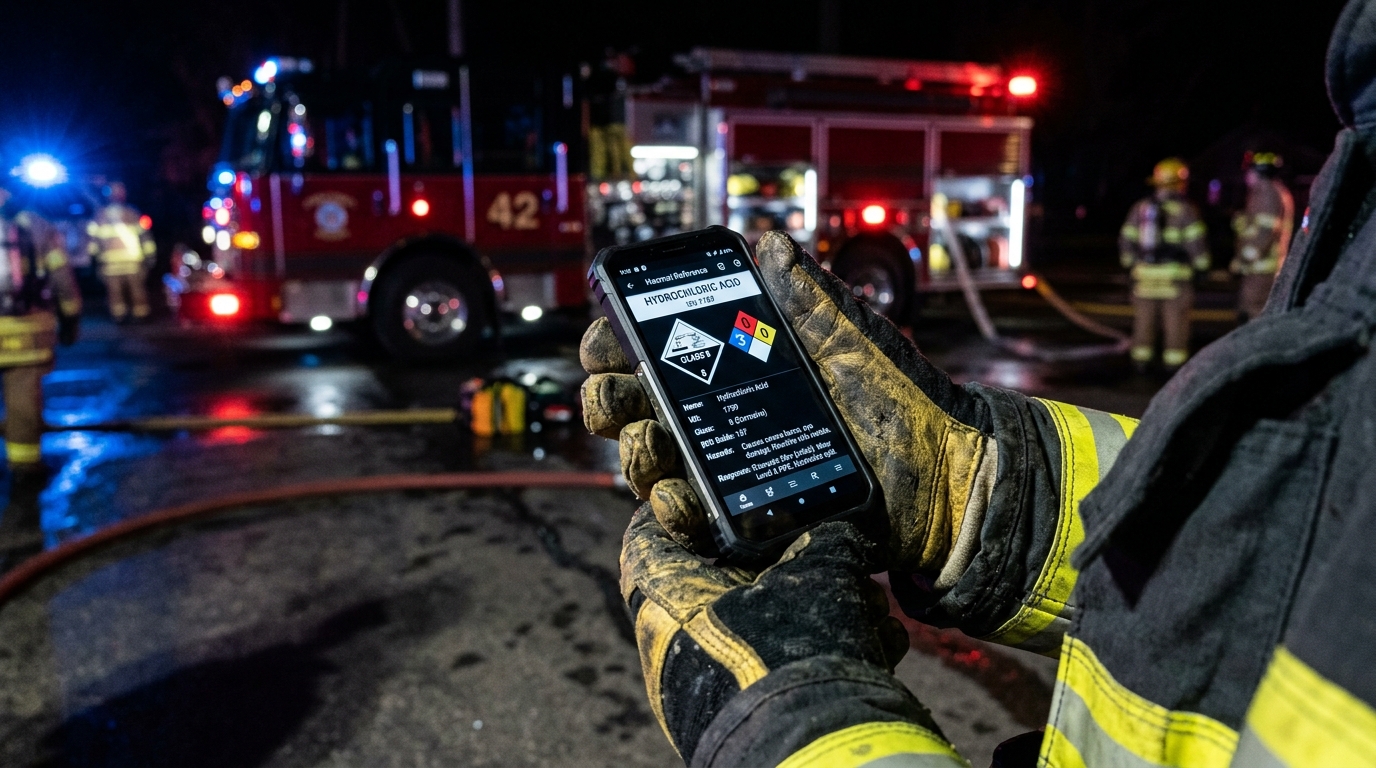
When the National Library of Medicine discontinued WISER in 2023, fire captain and hazmat technician Matt Lavin from the Hudson County Hazmat Task Force in New Jersey decided to build what no one else would. FireHazmat, developed by Lavin's two-person company Open Scaffold Labs, is a free offline hazmat reference platform that consolidates the complete ERG 2024 with IDLH and exposure limits from the NIOSH Pocket Guide, physical properties from PubChem, and hazard-class detail from 49 CFR into a single app. It includes placard identification, day and night protective-action distances, one-tap CHEMTREC and NRC dialing, and an unknown-substance wizard that works from observable conditions on scene.
The app works entirely offline because, as Lavin puts it, the calls where you need it most are the ones where you have no signal. Every data value in the app traces to a verified government source, and the build process refuses to ship if any value does not meet that standard. Lavin said roughly 9,000 unverified values were re-sourced or deleted during development to meet that bar. The phone version is free with no subscription, no signup, and no tracking. An apparatus-tier version adds live evacuation mapping with weather-driven plume modeling and a NIMS/ICS incident command board for iPads and laptops in the rig, with free 30-day trial licenses available for department evaluations.
Lavin built FireHazmat using AI-assisted development tools with no prior software background, a detail he is upfront about. He said the key was domain knowledge from years of running hazmat calls, not coding experience. The app is available now on the Apple App Store and is designed as a direct replacement for the workflow that WISER, the ERG book, CAMEO, and the NIOSH Pocket Guide used to require separately.
The take: Download it today. If your rig still has a paper ERG from 2020 in the compartment and your crew has been without a real WISER replacement since NLM killed it, this is the answer. Free, offline, every number sourced to a government publication, built by a working fire captain who got tired of juggling five tools on a hazmat call.
Read the full profile at HazMat Nation →
HEALTH / 9/11 / LONG-TERM IMPACT
FDNY 25-Year Health Report: WTC Illness Deaths Now Exceed The 343 Lost On 9/11
The FDNY World Trade Center Health Program released a landmark 25-year report detailing the long-term health toll on firefighters, EMTs, paramedics, and rescue workers who responded to and worked the pile after September 11, 2001. The central finding is stark: more than 600 FDNY members have now died from World Trade Center-related illnesses, a number that exceeds the 343 killed on the day of the attacks. Across all first responder agencies, the WTC Health Program counts more than 9,000 deaths linked to Ground Zero exposures.
Fire Commissioner Lillian Bonsignore said more than 12,000 FDNY members have been certified for at least one WTC-related condition. Since 9/11, more than a tenth of that group has died. Nearly one in four certified members has been diagnosed with cancer. Chief Medical Officer David Prezant, who was at Ground Zero on September 11, detailed the cancer breakdown: over 1,000 prostate cancer cases, nearly 300 hematologic cancers including lymphoma and leukemia, 221 melanoma cases, and more than 100 thyroid cancers in the top five categories alone.
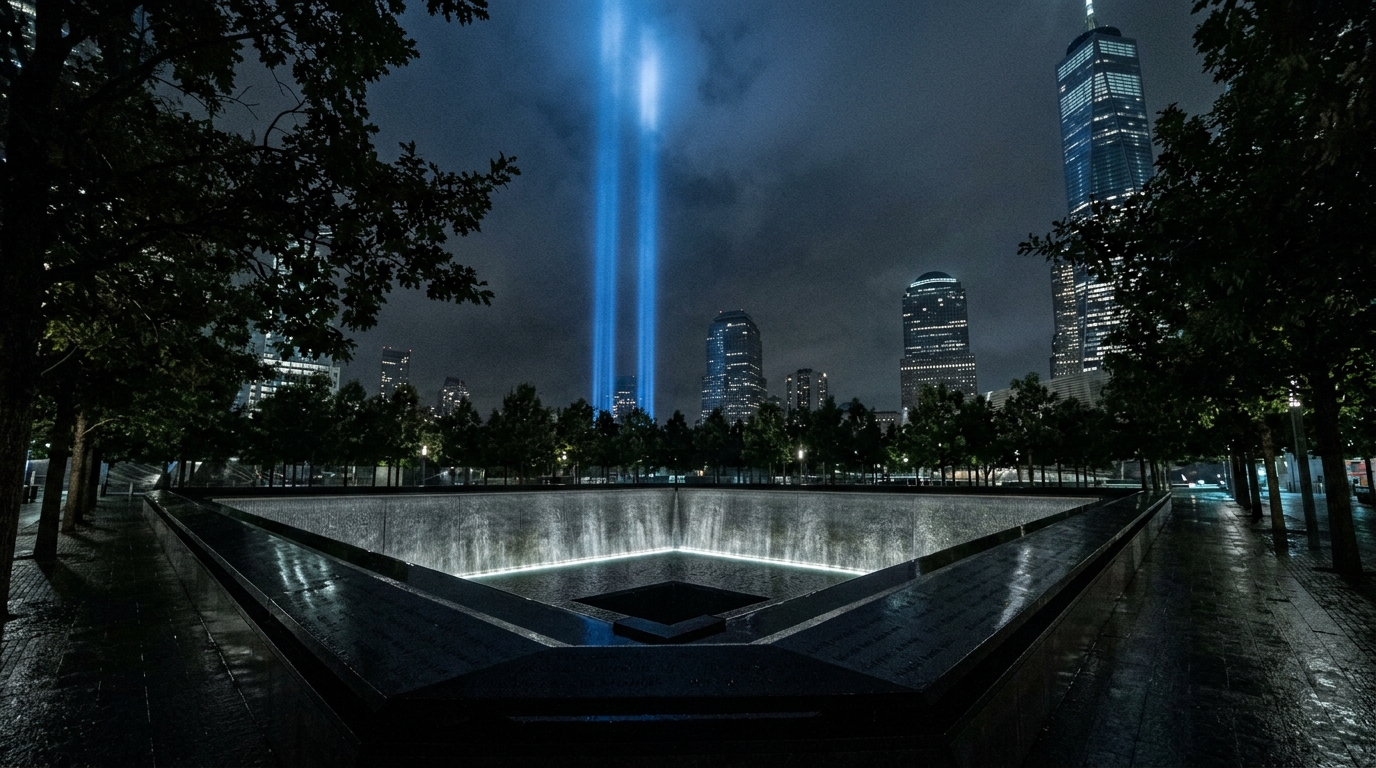
The report does carry one critical lesson. Prezant said aggressive monitoring leads to earlier diagnosis, which leads to earlier treatment, which leads to increased survival rates. The WTC Health Program, federally funded through Congress, provides free health coverage for registered FDNY members and has become the largest occupational health monitoring program for firefighters in the country. The report lands as New York prepares for the 25th anniversary on September 11 and the FDNY adds 36 more names to its WTC Memorial Wall in Brooklyn, which now bears 438 names of post-9/11 line-of-duty deaths from illness.
The take: The number that matters is not 343 anymore. It is 600 and climbing. Every department in the country faces the same toxic exposure question on a smaller scale after every structure fire, and this report is 25 years of proof that aggressive long-term health monitoring is the only thing that bends the survival curve.
Read the full story at ABC7 New York →
What We're Watching
Wildfire Triage AI Follow-Up: Watch for peer review outcome at Operations Research and any pilot deployment with a state or federal fire management agency.
Drone Tariff Impact: Watch for distributor pricing adjustments as pre-tariff DJI inventory depletes, and whether Congress or the Commerce Department issues any public safety carve-outs from the Section 232 thermal drone tariff.
FireHazmat Apparatus Tier: Watch for the apparatus-tier version with live plume modeling and ICS boards to move past the 30-day trial phase and whether departments adopt it as a standard rig tool alongside or replacing legacy CAMEO installations.
FDNY 9/11 Health Monitoring: Follow the 25th anniversary commemorations and whether Congress extends or expands WTC Health Program funding past its current authorization, which affects every certified member still being monitored.
Get The Overhaul Brief every Tuesday
Fire service intelligence from the people who've been there. Free, always.
Subscribe Now