USFA Warns Most EV Owners Cannot Open Their Own Doors After a Crash
This week inside the Brief:
- ■ USFA warns most EV owners cannot open their own doors after a crash
- ■ Mississippi State wins NSF grant for AI robot firefighting
- ■ Waterloo builds AI system to predict how house fires behave
- ■ Sheridan students build a LiDAR helmet that maps structure fires in real time
- ■ Hong Kong pairs fire forecasting with an AI agent
- ■ FOIA release: 1,000+ agencies cleared for drone flights
- ■ Nova Scotia launches first province-wide fire leadership certificate
Read time: 12 minutes
EXTRICATION · EV · TRAINING · USFA
USFA Warns Most EV Owners Cannot Open Their Own Doors After a Crash
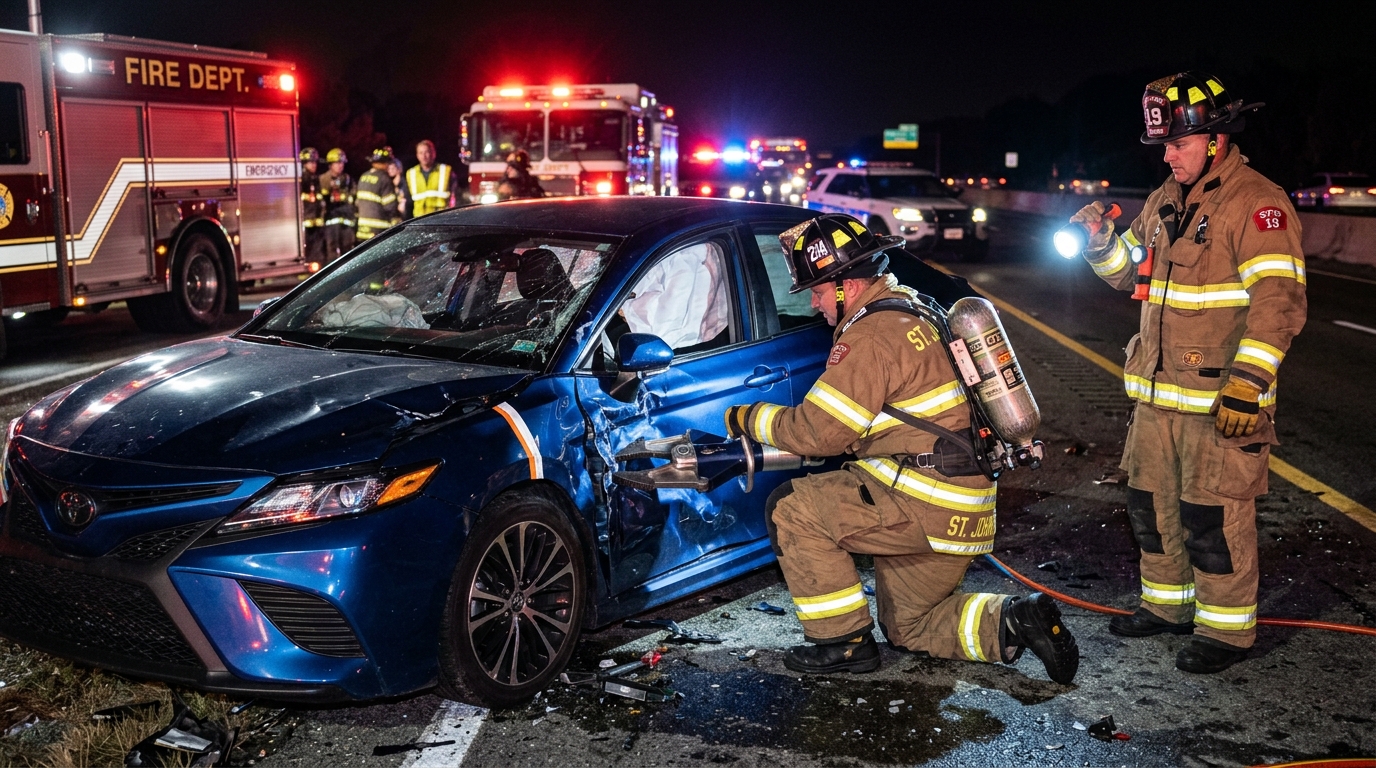
The U.S. Fire Administration published a bulletin on August 12 warning that most electric vehicle occupants have never located the manual door release in their own car, and that many of those releases are hidden behind interior trim panels, under floor mats, or inside door pockets where no one would think to look during a crash. The alert applies to both occupants trying to self-extricate and to firefighters arriving on scene. USFA is urging departments to add EV door-release familiarization to their training rotations, noting that manual release locations vary not just between manufacturers but between model years of the same vehicle. Rear-seat mechanisms are especially difficult to find in low-visibility or high-stress conditions. The bulletin also calls on departments to consult manufacturer-specific emergency response guides before incidents, since some powered latches require steps that are counterintuitive to anyone trained on conventional handles.
The take: Every department running auto extrication drills should be adding an EV door-access station now, because the next MVC with a trapped occupant in a powered-latch vehicle is not a future scenario, it is a next-shift probability, and fumbling for a hidden cable release in smoke with a patient screaming is not the time to learn the system.
Read the full story at USFA →
DEEP DIG · AI · ROBOTICS · TRAINING
Mississippi State Wins Federal Grant for AI Robot Firefighting
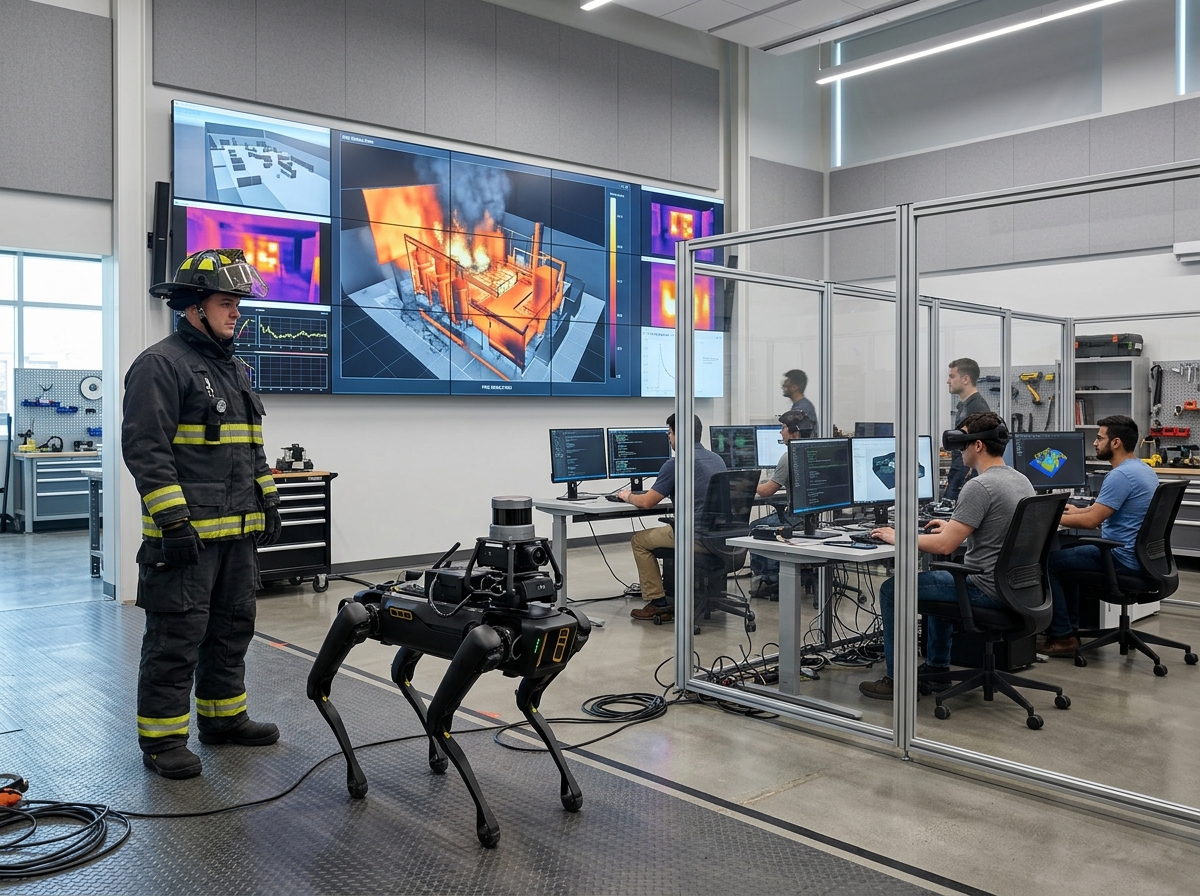
Mississippi State University engineering professor Seunghan Lee has won a five-year National Science Foundation CAREER Award worth more than $516,000 to build an AI-driven simulation framework for human-robot emergency response. The project aims to help firefighters and robots share information, assess risk together, and make safer decisions during high-stakes fire and emergency scenarios. The framework combines changing fire and environmental conditions with virtual reality training components and AI-driven simulations, letting departments rehearse complex scenarios that would be too dangerous or expensive to stage physically. Lee said the goal is a unified system that improves both the safety and efficiency of human-robot collaboration on the fireground, not just faster robots.
The take: This is federal seed money for exactly the kind of human-machine teaming problem that will determine whether robots on the fireground actually reduce risk to firefighters or just add another system commanders have to babysit during a mayday.
Read the full story at Mississippi State University →
DEEP DIG · RESEARCH · BUILDING SCIENCE
Waterloo Builds AI System to Predict How House Fires Behave
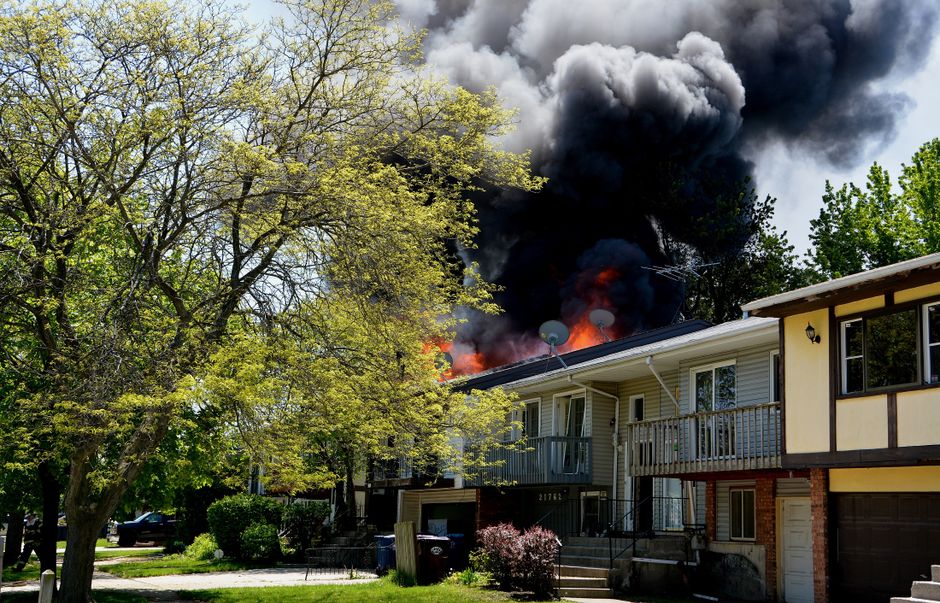
Researchers at the University of Waterloo have developed an AI and data science framework that predicts how fires behave inside modern homes, where airtight construction and synthetic furniture materials make fires burn very differently than older building science assumed. The team ran 15 experimental fires in a campus burn house using up to 175 sensors tracking temperature, airflow, humidity, burn rate, and gas output. The resulting system combines statistics, data science, and machine learning to detect key transition points, such as when a fire begins to run out of oxygen, a moment that produces a spike in toxic smoke. The published framework, which appeared in the Fire Safety Journal, is intended to eventually inform building codes and give emergency responders and evacuation planners a clearer read on when a structure fire turns most dangerous.
The take: Modern fuel loads have already outpaced a lot of tactical assumptions firefighters train on, so a validated model of when under-ventilation flips a fire toxic could end up mattering more for command decisions than any hardware upgrade this year.
Read the full story at University of Waterloo →
INNOVATION · GEAR · LIDAR · STARTUPS
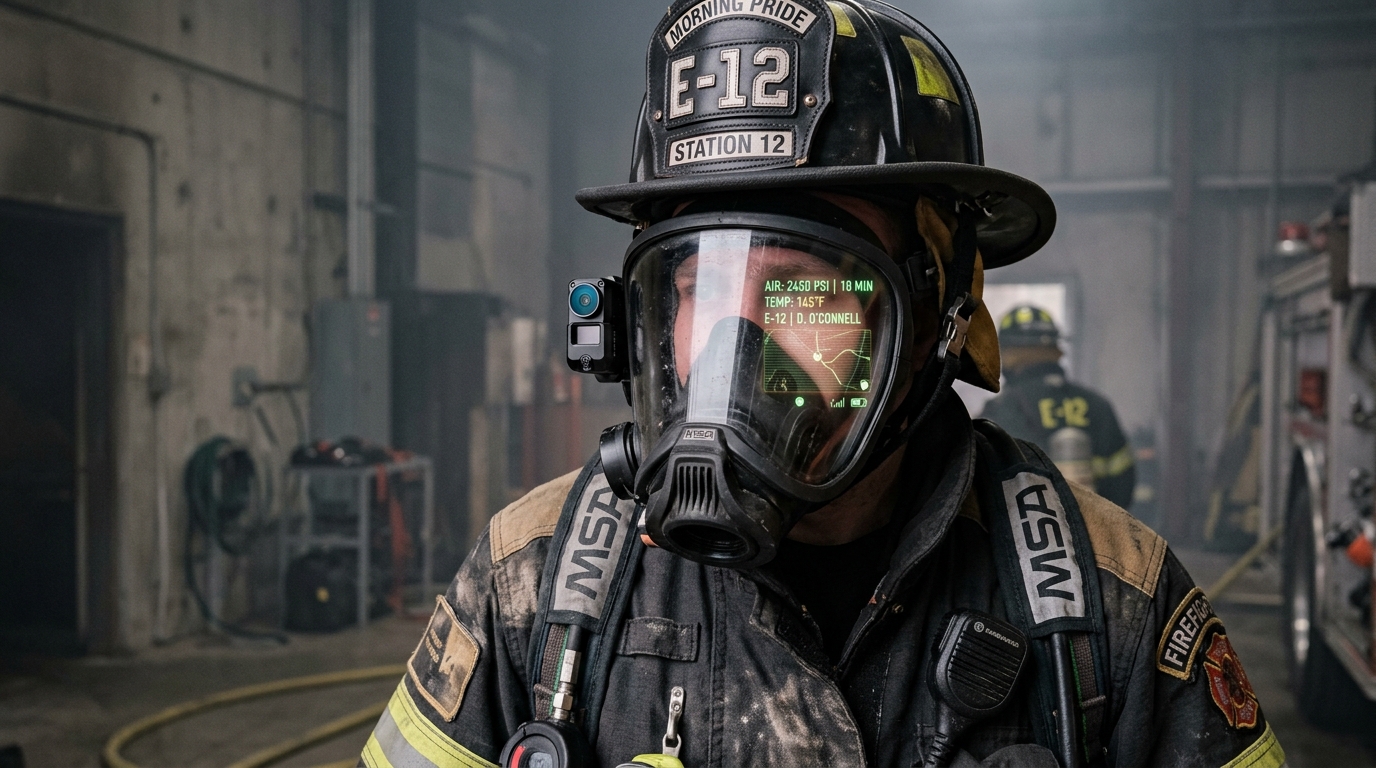
Sheridan Students Build a LiDAR Helmet That Maps Structure Fires in Real Time
A four-person student team from Sheridan College in Ontario has built Ember, a firefighter helmet prototype that uses a time-of-flight LiDAR sensor, custom XR glasses reverse-engineered from consumer hardware, and on-device machine learning to give crews a real-time 3D map of a structure interior overlaid on their visor, even in zero-visibility smoke. The team, operating as the startup IgnisXR, placed in the top ten across North America at Google's Solution Challenge Demo Day alongside entries from MIT and Stanford. The current prototype integrates live temperature readings, real-time object detection, and a unified heads-up display into a standard firefighter helmet. The team has been visiting fire stations across the Greater Toronto Area to gather feedback and was invited to an NYC startup incubator to continue development toward a commercial version.
The take: The difference between Ember and the thermal-overlay helmets already in department trials is that LiDAR builds a spatial map of the structure itself, not just heat signatures, which means crews could eventually see walls, stairwells, and obstacles that thermal imaging misses entirely, and that capability coming from a student team with consumer-grade parts says more about where this technology is headed than any enterprise price sheet.
Read the full story at Sheridan College →

DEEP DIG · AI · LLM · INCIDENT COMMAND
Hong Kong Researchers Pair Fire Forecasting With an AI Agent
A research team from The Hong Kong Polytechnic University and the Guangzhou Institute of Industrial Technology built a hybrid AI system that fuses building fire forecasting with a large language model to generate real-time emergency guidance. The core model, called ConvLSTM Fire, reconstructs two-dimensional building temperature maps even when heat, smoke, or structural collapse knocks out individual sensors, filling gaps by learning correlations with sensors that are still transmitting. That reconstructed thermal picture then feeds a domain-tuned LLM benchmarked against ChatGPT-4o, which converts raw temperature data into specific, room-level operational guidance for firefighters and building occupants instead of generic advice. The study, published in the journal Engineering, found that feeding the LLM full two-dimensional temperature fields produced significantly more accurate and actionable recommendations than single-point sensor readings alone.
The take: The real innovation here is not the LLM, it is that the system keeps functioning when the sensor network itself is failing, which is exactly the moment incident commanders need reliable data the most.
Read the full story at EurekAlert →

POLICY · DRONES · FAA · ACCOUNTABILITY
FOIA Release Shows Over 1,000 Agencies Cleared for Drone Flights
A Freedom of Information Act release obtained by the Electronic Frontier Foundation and published July 23 shows the FAA approved streamlined Part 91 waivers for more than 1,000 public safety agencies, including many fire departments, between April 2025 and February 2026. The waiver clears agencies to fly drones beyond visual line of sight, putting each one a short step away from launching a full drone-as-first-responder program. The FOIA data names every agency along with approval and expiration dates, letting the public look up whether their local department made the list. The EFF and drone industry outlets note the waiver replaced older, more bespoke safety case reviews with pre-built checklists, dramatically speeding approvals, though one clear gap remains: volunteer fire departments and nonprofit search and rescue teams generally do not qualify as public aircraft operators and must use a separate, more limited process.
The take: The FAA quietly removed the biggest procedural bottleneck to nationwide drone-as-first-responder rollout, so the next fight will not be about approvals, it will be about which departments can actually afford the aircraft, software, and staff time now that permission is no longer the obstacle.
Read the full story at EFF →
CAREER · LEADERSHIP · TRAINING · CANADA
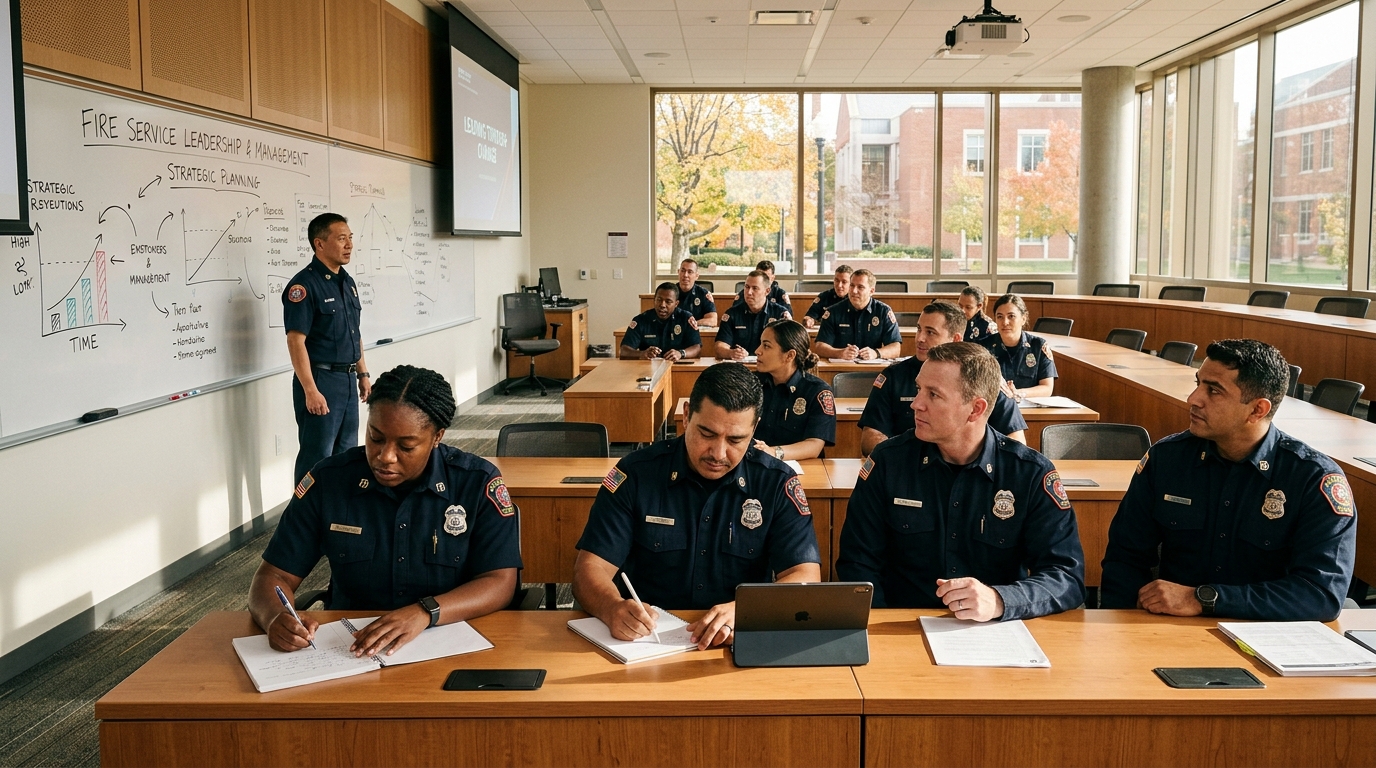
Nova Scotia Launches First Province-Wide Fire Service Leadership Certificate
The Province of Nova Scotia announced a partnership with Dalhousie University on August 28 to launch the Nova Scotia Fire Service Leadership Certificate, a fully online program designed to give firefighters a standardized path into leadership roles without leaving their departments. The program consists of six courses covering station operations, fire prevention and suppression management, municipal administration, finance, human resources, and organizational leadership, completable in 18 months at roughly three hours of study per week. The province is investing over $209,000 to fund the pilot, which will use case studies drawn specifically from Nova Scotia departments so participants learn from scenarios they actually recognize. Applications open on Dalhousie's website in September for two pilot cohorts starting in January and April 2027. All courses are fully transferable and count toward Dalhousie's existing fire service leadership diploma programs, including pathways to Fire Officer III and IV certification.
The take: Most departments promote based on seniority and test scores because there is no affordable, fire-specific leadership curriculum that works around shift schedules, and a province funding a university to build exactly that, online, with transferable credits, is the kind of infrastructure play that other states and provinces should be stealing outright.
Read the full story at Halifax CityNews →
WHAT WE'RE WATCHING
Whether USFA's EV door-access bulletin triggers a wave of department training updates or stays filed under "we'll get to it," especially as powered-latch designs spread to more mainstream vehicles.
Where IgnisXR's Ember helmet lands after the NYC incubator, and whether a LiDAR-based approach attracts the kind of fire service partnership or NIST testing that could move it from prototype to production.
How many of the 1,000-plus waivered agencies actually stand up a working drone-as-first-responder program within a year of approval, and whether volunteer departments get an equivalent streamlined path.
Whether Nova Scotia's leadership certificate model gets replicated in other provinces or states, and how the first cohort feedback shapes the curriculum before wider rollout.
Subscribe to The Overhaul Brief
Weekly fire service news. Tech, AI, leadership, workforce, and the stories the trade pubs miss. No fluff, no fundraising appeals, no spam.
Subscribe Free