This week inside the Brief:
- ■Waco pilots AR thermal helmet displays
- ■MSA's new SCBA has a rescue beacon
- ■Colorado's secret wildfire risk scores
- ■Battery fire evacuates 500 homes
- ■80 kg mist unit cuts water use
- ■Folsom staffs an engine with EMTs
- ■One-stop shop for lithium fire tools
GEAR / THERMAL IMAGING / AUGMENTED REALITY
Waco Fire Puts Helmet-Mounted AR Thermal Imaging On 16 Firefighters In A $400K Pilot
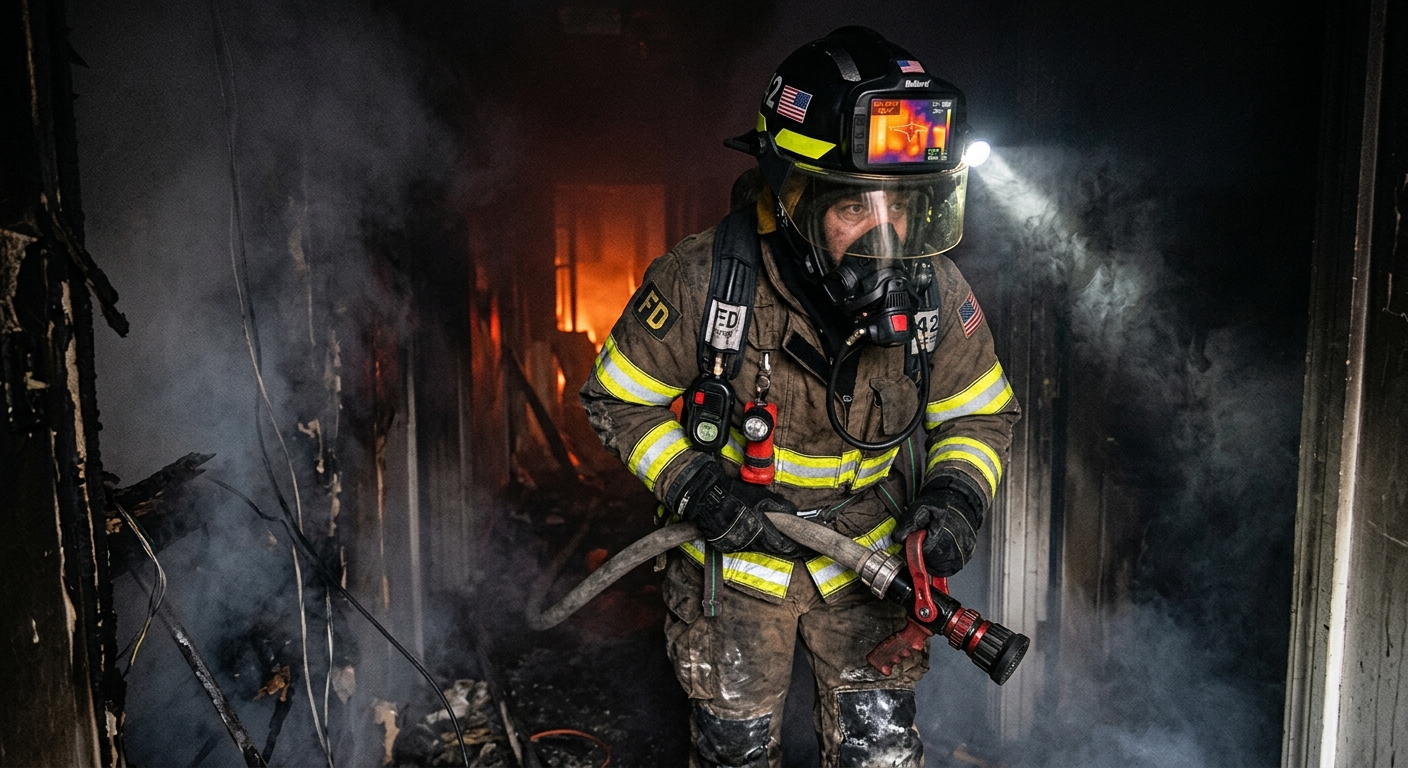
Waco City Council approved a three-year, $396,000 agreement with Qwake Technologies for 16 C-THRU helmet-mounted augmented reality thermal imaging units plus command software, training, and connectivity. The system overlays thermal imagery and navigation cues directly in the firefighter's field of view, streams real-time video to command staff, issues safety alerts, and supports post-incident review. Delivery is expected within 60 days with full deployment targeted for January 2027.
Deputy Chief Philip Burnett said the department will evaluate hands-free thermal capability against existing handheld TICs and gather firefighter feedback on the augmented-reality interface before any larger purchase. Qwake is offering a 30 percent discount on base systems and 60 percent on accessories during the development program. Waco becomes the second Texas department to field-test the platform, and departments watching this pilot will see the first real-world data on whether helmet-mounted AR thermal changes search speed, situational awareness, or command oversight compared with traditional handheld units.
The C-THRU system represents the current leading edge of TIC integration: rather than a device you hold while navigating or clip to the outside of your mask, the AR overlay puts thermal vision directly into the firefighter's field of view so both hands stay free and search and navigation happen simultaneously. The live command feed adds a layer of accountability and situational awareness that handheld units cannot provide.
The take: When a department puts helmet-mounted AR thermal in 16 units and streams live video to command, every chief evaluating next-generation TIC platforms now has a live reference for how that technology performs in the field.
Read the full story at Waco Tribune-Herald →
INNOVATIVE TOOL / SCBA / SEARCH AND RESCUE
MSA Launches G1 City Edition SCBA With Integrated Beacon That Helps Crews Find Firefighters Faster
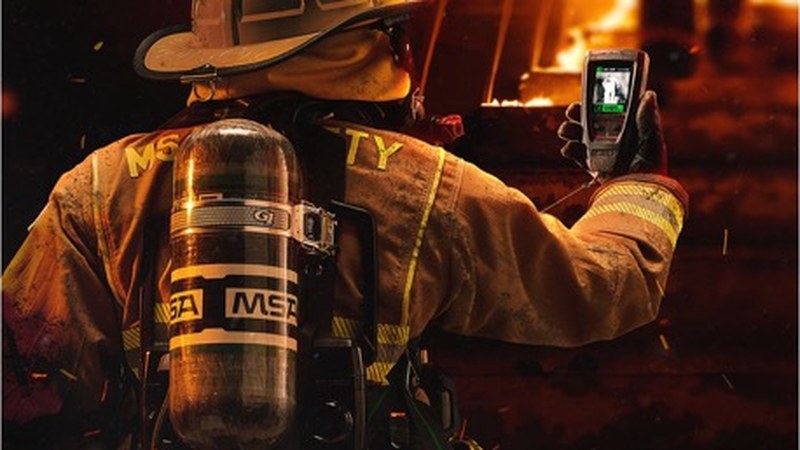
MSA Safety launched the G1 City Edition SCBA on September 23, 2026, building a LUNAR Beacon radio receiver directly into the SCBA power module so that any firefighter carrying a LUNAR Connected Device can search for and locate a crew member wearing the new pack. The integrated beacon eliminates a separate piece of equipment from the search-and-rescue workflow and feeds air pressure, alarm status, and location data through MSA's FireGrid Monitor application when connectivity is available.
The City Edition also reduces weight by more than 10 percent on the cylinder retention system, adds a low-profile swiveling lumbar pad that cuts up to half a pound compared with the previous adjustable configuration, and includes thicker regulator and valve controls, thinner shoulder pads, longer pull straps, and facepiece harness changes for one-handed gloved donning. The entire platform runs on a single rechargeable battery with integrated telemetry. It meets the 2025 edition of NFPA 1970.
For departments evaluating next-generation SCBA, the City Edition is the first production unit to embed firefighter-location beacon technology directly into the breathing apparatus rather than requiring a separate accessory. That integration changes the procurement conversation from "add-on accountability device" to "accountability built into the air pack your crew already carries."
The take: When the beacon that helps find a downed firefighter is built into the SCBA instead of clipped onto a harness, accountability stops being an add-on and becomes a default capability of the air pack itself.
Read the full announcement at MSA Safety →

AI / INSURANCE / WILDFIRE POLICY
Colorado Just Forced Insurers To Reveal The Secret AI Scores Driving Wildfire Coverage Decisions
A new Colorado law, House Bill 25-1182, took effect July 1, 2026 and now requires insurance carriers using proprietary wildfire risk models to disclose which model they used and give homeowners a formal process to see and challenge their individual property wildfire score. Until now, competing black-box models from companies like Verisk, CoreLogic, and ZestyAI have quietly determined whether a home counts as a wildfire risk, each using different scoring scales and undisclosed cutoffs, with homeowners having no way to see or contest the number driving their premium or non-renewal.
ZestyAI sells its Z-FIRE and Z-SPARK models to more than half of top US carriers and is accepted in rate filings by regulators in over 20 states, yet consumers have never had a portal to check their own score. Colorado's law is the first in the country to crack that opacity open, and industry analysts expect more states to follow given similar coverage crises in California and elsewhere.
Fire chiefs increasingly get pulled into these disputes when residents ask whether their department's ISO rating or local mitigation work should count toward appealing a score that determines their coverage. This is a policy fight that reaches well beyond the insurance industry into fire prevention bureaus, and the transparency requirement opens new avenues for departments to demonstrate the value of community mitigation programs in concrete financial terms for residents.
The take: Insurers have used algorithmic risk scores to reshape entire neighborhoods' coverage options for years with zero transparency, and Colorado just became the first state to force the algorithm into the open.
Read the full analysis at UNSW BusinessThink →
SUPPRESSION / BATTERY / HAZMAT
A California Utility Battery Fire Burned For Four Days And Needed 1,800 Gallons Per Minute To Stop
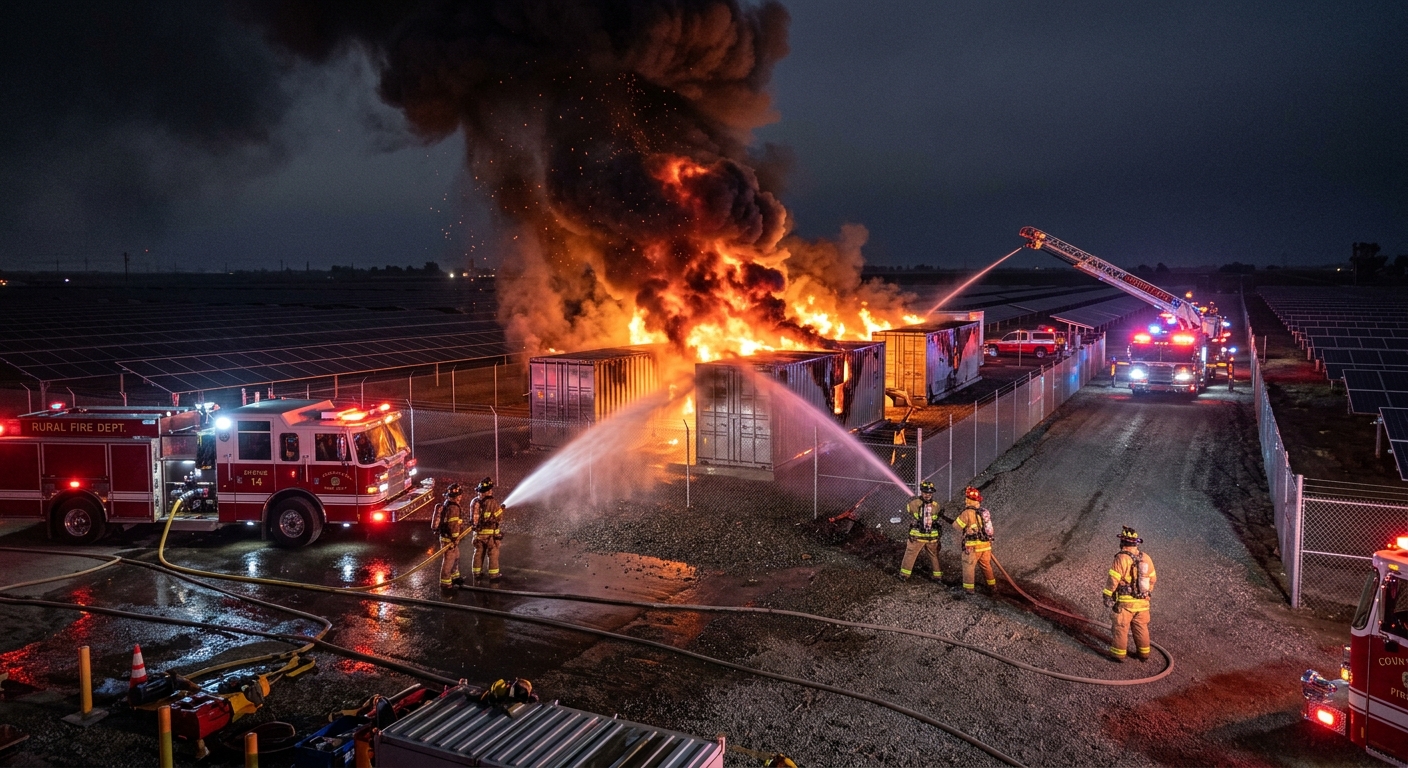
A lithium-ion battery energy storage system fire at the Metropolitan Water District's Weymouth Water Treatment Plant in La Verne, California forced the evacuation of approximately 500 homes beginning September 22 and kept crews on scene for four days, applying as much as 1,800 gallons of water per minute to prevent a second battery bank from igniting. The blaze started in one of two large battery storage containers paired with a rooftop solar field, and heat from the first unit pushed the adjacent bank past its safe operating temperature range, requiring firefighters to work alongside private battery specialists before all units were de-energized and deemed safe.
Hazmat crews deployed a robot to collect air samples directly at the battery enclosure rather than relying solely on perimeter monitoring. Final battery debris removal required specialized packaging shipped from Ohio before the materials could legally be transported to a hazardous waste facility, a regulatory constraint most departments have never encountered. The Metropolitan Water District has placed all remaining on-site battery units offline pending a root-cause investigation led jointly with battery equipment contractors.
This incident is a preview of a response type that will reach every region of the country as grid-scale battery storage expands alongside solar and wind generation. Departments in jurisdictions approving new battery storage facilities need protocols, specialized extinguishing agent stockpiles, and pre-incident agreements with battery contractors before the first call, not after. The La Verne incident is the first publicly documented multi-day suppression operation at a utility-scale BESS and sets a national reference point for pre-incident planning.
The take: A four-day suppression operation requiring 1,800 gallons per minute, robotic air sampling, and out-of-state hazmat packaging is not a car fire with a bigger battery, and most departments have no pre-incident plan for it.
Read the full story at the Los Angeles Times →

INNOVATIVE TOOL / SUPPRESSION / WATER EFFICIENCY
An 80 Kg Skid Unit That Throws A 35-Meter Drenching Mist Is Rethinking How Much Water A Knockdown Really Needs
UK-based FASUK Fire Group is fielding the TRI-XP70 Ultra High Pressure Firefighting System, which uses ultra-high-pressure technology to produce a fine water mist that rapidly absorbs heat and cools burning material, delivering fast knockdown while using significantly less water than conventional attack lines. The self-contained system is mounted on a compact skid weighing roughly 80 kg, light enough to ride on a 4x4 or trailer, and its UHP ULTRA configuration delivers a long-hanging drenching mist through a 25-meter hose with an effective throw of up to 35 meters.
The system pairs with the company's TRIDENT Multi-Purpose Foam Concentrate, a fluorine-free suppression agent formulated without PFAS, PFOS, or PFOA. TRIDENT is 100 percent plant-based, fast-biodegradable, and roughly 90 percent water, and it is rated across ABCDEF-class risks including lithium-ion battery fires. The manufacturer says the foam leaves a no-burnback coating that inhibits re-ignition, a meaningful feature for EV, battery storage, and waste-facility incidents where reignition is the recurring problem.
For departments covering wildland-urban interface, rural response areas with weak hydrant coverage, or growing EV and battery risk, the combination targets three pain points at once: water supply, PFAS liability, and burnback. UHP mist systems are not new, but packaging one at 80 kg with a fluorine-free lithium-rated foam is a configuration worth watching as US distributors pick up equivalents.
The take: Water efficiency, PFAS-free foam, and lithium-ion capability in one 80 kg package is the direction suppression equipment is heading - if your district has weak water supply or growing battery risk, this category belongs on your evaluation list.
Read the full story at Innovation News Network →

STAFFING / EMS / BUDGET
Folsom Restored A Suppressed Engine Company By Hiring Single-Role EMTs Instead Of Firefighters
The Folsom Fire Department returned Engine 39 to service after eleven months out of operation due to budget cuts, accomplishing the restoration without adding a single new firefighter by instead hiring 14 single-role paramedics and EMTs who staff ambulances and handle medical calls. Under the new model, firefighters no longer need to be pulled from fire suppression training and equipment to cover medical calls, while single-role EMS personnel respond to their own high-volume workload at a significantly lower labor cost per position.
Fire Chief Jason Solak told the Folsom City Council the change was expected to save the department up to $210,800 in the current fiscal year alone, enough to justify restoring the engine and its fire suppression coverage of Station 39's district on Folsom's eastern rural fringe. The department now operates two concurrent staffing tracks, and the separation means EMS workload growth no longer automatically translates into a demand for full-cost firefighter hires or mandatory overtime spending.
This model is gaining traction in departments where EMS calls account for 70 percent or more of total volume but budget constraints make adding cross-trained firefighters unsustainable. It is controversial in some union environments where career firefighters view EMS work as part of their professional scope, but the Folsom outcome gives financial administrators and chiefs a concrete case study for a hybrid staffing structure that separates EMS volume from fire suppression cost.
The take: When a city can restore a suppressed fire engine by hiring cheaper EMTs rather than more firefighters, the cost math of cross-trained staffing becomes a political target, and Folsom just handed that argument a working proof of concept.
Read the full story at FireRescue1 →
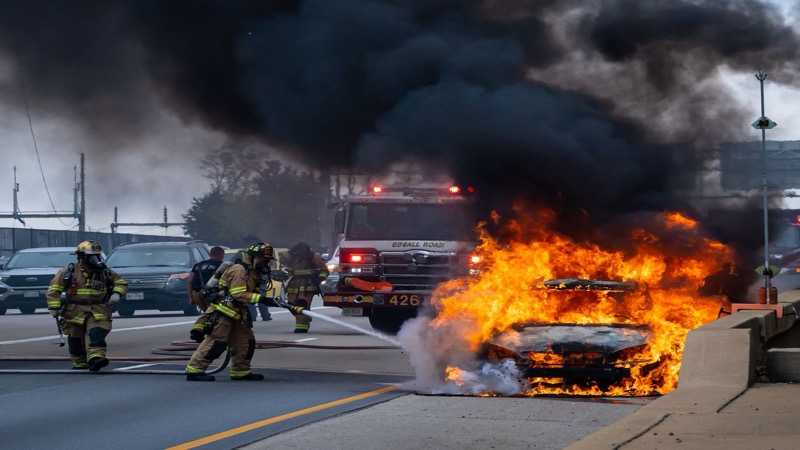
INNOVATIVE TOOL / LITHIUM / FIRE SUPPRESSION
TheFireStore Launches Stop Battery Fires, A Dedicated Lithium-Ion Response Platform For Fire Departments
Witmer Public Safety Group, the parent company of TheFireStore, launched StopBatteryFires.us in September 2026 as a single-source platform for lithium-ion battery fire suppression and response equipment. The site consolidates products from multiple manufacturers into one purchasing channel organized by incident type: e-bike and scooter fires, electric vehicle fires, grid-scale energy storage fires, and consumer electronics thermal runaway events. The platform includes lithium-rated fire blankets, battery containment bags, specialized extinguishing agents, and PPE designed for the thermal runaway hazard profile.
Lithium-ion battery fires present a fundamentally different suppression challenge than Class A or Class B fires. Thermal runaway in a lithium cell generates its own oxygen, reignites after apparent extinguishment, and produces toxic hydrogen fluoride gas. Most departments responding to e-bike fires in apartment buildings or EV fires on highways are using equipment and tactics designed for conventional fuel fires. The Stop Battery Fires platform is built around that gap, curating products specifically tested against thermal runaway scenarios rather than listing them alongside traditional firefighting equipment.
For department procurement officers, the platform reduces the research burden of sourcing lithium-specific response equipment from multiple vendors with inconsistent product descriptions and testing data. For training officers, the site's incident-type organization maps directly to the response categories departments are building into their SOPs as lithium battery incidents increase.
The take: When e-bike fires are now the leading cause of fire deaths in New York City and EV thermal runaway can burn for hours, a curated one-stop equipment source for lithium battery response fills a gap most departments are still solving with Google searches and trade show business cards.
Read the full story at Firehouse →
What We're Watching
Waco AR Thermal Pilot: Track Waco's January 2027 deployment results and whether Qwake publishes aggregated performance data from its pilot departments.
Fluorine-free foam transition: Watch for more US distributors picking up PFAS-free suppression concentrates rated for lithium-ion fires as state PFAS restrictions tighten through 2027.
BESS Pre-Incident Planning: Track the Metropolitan Water District root-cause investigation and whether NFPA or OSHA issues updated BESS pre-incident planning guidance for municipal fire departments.
Lithium Battery Fire Response Standards: Track whether NFPA or UL issues updated lithium-ion battery fire response guidelines for first responders as e-bike and EV thermal runaway incidents continue to climb nationally.
Get The Overhaul Brief Every Tuesday
Fire service intelligence delivered to your inbox. Join thousands of fire service leaders who rely on The Overhaul Brief to stay ahead.
Subscribe Free