This week inside the Brief:
- ■CAL FIRE gets a dedicated innovation unit
- ■NVFC tells departments how to use AI for social media
- ■724-page LA fire report finds units went dark
- ■MSA builds a mayday locator into its new SCBA
- ■EV fires force new 24-hour scene protocols
- ■LAFD sues cyber vendor after network breach
- ■California PPE brings CO2 gear decon nationwide
AI / TECHNOLOGY / INNOVATION
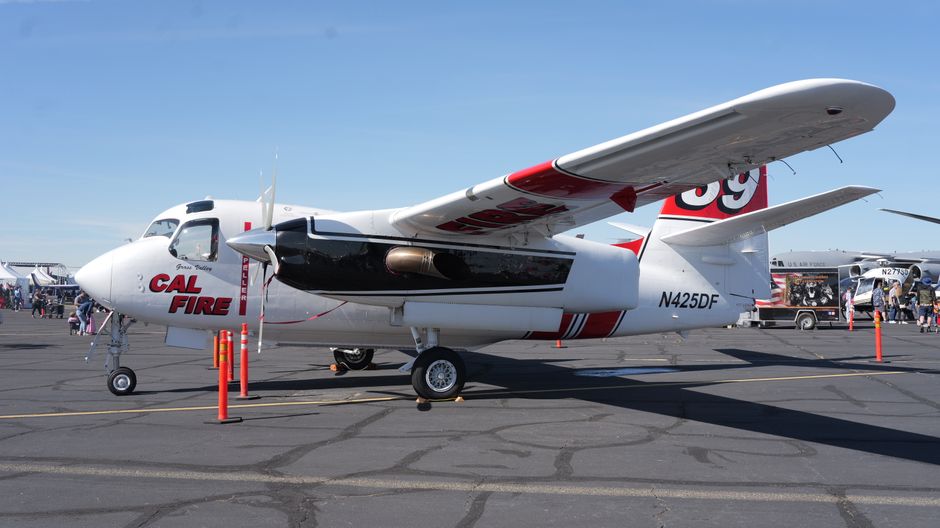
California Gives CAL FIRE A Dedicated Innovation Unit To Test And Deploy Emerging Technology
Governor Gavin Newsom signed legislation on September 30, 2026 establishing the Fire Innovation Unit within CAL FIRE, a dedicated team of fire chiefs, IT specialists, and researchers charged with testing and deploying emerging technology across the full spectrum of fire prevention and response operations. The unit will function as CAL FIRE's formal innovation arm for technology research, vendor evaluation, procurement, and deployment across fire detection, prevention, suppression, evacuation, and post-incident recovery.
CAL FIRE already operates one of the largest camera networks in the country with machine-learning smoke detection, with 915 of its 1,260 AlertCalifornia mountaintop cameras now detecting smoke and alerting control centers before any public reports come in. The agency is also expanding drone use for fire mapping, prescribed burns, and tactical operations, and is incorporating lidar data to assess vegetation and fuel conditions.
The legislation establishes a formal process for what has been informal and ad hoc technology adoption inside CAL FIRE for years. FIU will develop structured testing protocols, cybersecurity and privacy evaluation standards, and integration pathways for tools that need to connect with existing CAD, records, and operational systems. The unit does not formally launch until January 2027 but is already conducting preliminary work.
The take: CAL FIRE's technology adoption decisions set informal national standards. A structured evaluation process with formal testing protocols is more likely to produce replicable results than the current department-by-department improvisation happening across the country.
Read the full story at StateScoop →
MEDIA SKILLS / AI / RECRUITMENT
NVFC Tells Departments Exactly Which AI Tools To Use For Social Media And Recruitment
The National Volunteer Fire Council published an updated Social Media Toolkit in 2026 naming specific AI tools, ChatGPT, Claude, Canva, Adobe Express, Copy.ai, Jasper, and CapCut, that departments can use to draft recruitment posts, generate safety-campaign graphics, suggest trending hashtags, and edit recruiting video, cutting the time a volunteer PIO spends on content creation.
The toolkit pairs the AI guidance with a hard policy framework: designate one or two trained platform managers, write a social media policy before posting anything, keep personal health information and incident-scene victim photos off every platform, and have a documented plan for correcting misinformation without engaging hostile commenters publicly. NVFC frames AI as a force multiplier for departments that cannot afford a full-time communications officer, not a replacement for a vetted posting process.
The timing matters. Volunteer departments are competing for recruits against every other employer now running AI-assisted hiring campaigns, and a department with no social media policy and no AI workflow is losing recruiting ground to departments that have both. NVFC's toolkit is free and designed to be implementable by a single volunteer PIO in an afternoon.
The take: Every chief fighting a recruiting shortage should hand this toolkit to whoever runs their department's social accounts this week. The AI tool list is useful, but the policy guardrails around it, HIPAA, misinformation response, platform-manager accountability, are the part that keeps a well-meaning volunteer from turning a recruiting post into a liability problem.
Read the full story at NVFC →
WILDFIRE / ICS / COMMUNICATION
724-Page State Report Finds LA Fire Units Went Dark, Ran Split Maps, And Had No Unified Command
A 724-page independent report commissioned by Governor Gavin Newsom and released October 2, 2026 by UL Research Institutes found that the January 2025 Los Angeles fires exposed catastrophic breakdowns in inter-agency communication, incident command, and basic situational awareness. Emergency comm centers routed calls through a single captain's personal cellphone as systems overloaded. Firefighter units went dark because supervisors lost tracking. LAFD and LAPD operated simultaneously from two different evacuation maps.
The Eaton Fire expanded through west Altadena overnight without incident command knowing until daylight, by which point most structures had already burned. The report confirmed earlier reporting that LAFD failed to fully extinguish the Lachman Fire, which later rekindled into the Palisades Fire, and that the department lacked established standards for mop-up work. Researchers evaluated more than 900 burned structures, interviewed 295 agency personnel, and reviewed call recordings, response data, and radio communications.
The 175 findings and 266 recommendations include portable satellite internet kits for command staff, mandatory multi-jurisdiction wildfire incident management training, and a requirement that fire and law enforcement operate under unified command. The operational failures documented here - units going dark, split evacuation maps, and a fire chief learning about mass structure loss at sunrise - are not LA-specific. Any metro department running multi-agency response faces the same ICS architecture risks.
The take: The 266 recommendations in this report are a checklist every large department should run against their own multi-agency response structure today, before the next WUI event forces the same lessons at their own cost.
Read the full story at Spectrum News →
TOOL INNOVATION / SCBA / MAYDAY RESPONSE
MSA Builds A Mayday Locator Into The SCBA Itself
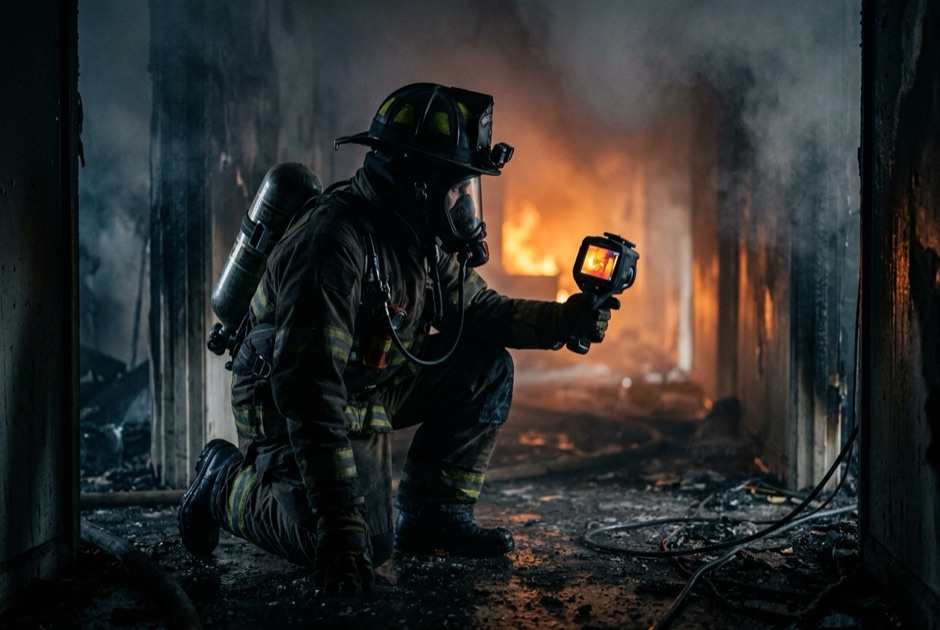
MSA Safety launched the G1 City Edition SCBA on September 23, 2026, building integrated LUNAR Beacon Technology directly into the pack's power module. Any firefighter carrying a LUNAR Connected Device can now search for and locate a crew member wearing the new SCBA, without a separate beacon to issue, charge, or forget on the rig.
When a firefighter goes into alarm, the LUNAR handheld uses MSA's FAST (Firefighter Assist Search Technology) network to give simplified directional cues straight to the downed member. Paired with the pack, the same device displays SCBA air pressure and pushes alarm status and location data to incident command through MSA's FireGrid Monitor app when data or radio connectivity is available. MSA also cut up to a half-pound from the standard configuration, and the pack meets the 2025 edition of NFPA 1970.
For departments the value is in mayday math: RIT search time in zero visibility is the variable that kills. Turning every SCBA on the floor into a findable beacon, and every LUNAR into a direction finder, moves a mayday from a grid search toward a directed approach, using equipment crews already wear.
The take: Locator tech has always lost to the same problem: one more device someone has to remember to carry and switch on. Putting the beacon inside the pack removes that failure point. If your department is in an SCBA replacement cycle, ask your MSA rep for a LUNAR pairing demo before the bid specs are written.
Read the full story at MSA Safety →
EV / PROTOCOLS / TRAINING
Electric Vehicle Battery Fires Force Departments To Overhaul Scene Clearance Protocols
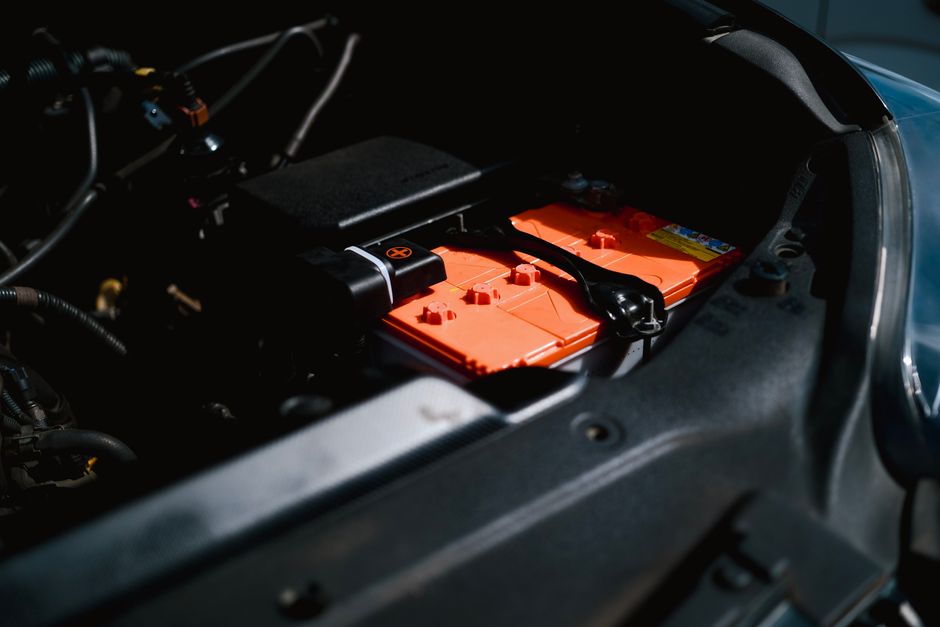
Fire departments across Missouri and Colorado formally updated their EV response protocols in late September 2026 after a string of lithium-ion battery incidents where crews experienced unexpected reignition hours after initial knockdown. Departments reported needing 3,000 to 8,000 gallons of water per EV fire compared with roughly 500 gallons for a comparable gasoline vehicle fire, with some deploying containment pools to manage thermal runaway events. An Adams County, Colorado incident documented a battery reigniting 18 hours after initial suppression.
The protocol updates share several common elements: a mandatory 24-hour monitoring period following EV battery fires, thermal imaging to detect subsurface cell activity before clearing a scene, updated pre-incident planning for parking structures with high EV density, and coordination with towing operators who are frequently unprepared for the reignition window. Several departments have begun flagging EV-registered vehicle addresses in their CAD systems for enhanced response protocols.
No federal standard currently governs EV fire response protocols. NFPA is working on updated guidance but has not published binding standards. Individual departments are developing their own protocols in the absence of national direction, creating significant inconsistency in how the reignition hazard is managed across the country.
The take: With EV registrations projected to exceed 30 million in the US by 2030, the protocol gap departments are filling with local improvisation needs to become a national standard before a firefighter or bystander is killed in a reignition event that a cleared scene should have caught.
Read the full story at KY3 →

CYBERSECURITY / IT / VENDOR ACCOUNTABILITY
LAFD Sues Cybersecurity Vendor After Hackers Successfully Infiltrated Fire Department Network
The Los Angeles Fire Department filed a lawsuit against a cybersecurity vendor after hackers infiltrated the department's network infrastructure, according to court filings reported in September 2026. LAFD alleges the vendor failed to detect the intrusion and did not notify the department within a contractually required timeframe. The case involves a significantly large urban department with complex network dependencies spanning CAD, records management, personnel systems, and operational communications.
The LAFD case follows the Louisiana St. George Fire Protection District's May 2026 lawsuit against its own IT vendor, which alleged the managed security provider allowed hackers to operate undetected inside the fire district's network for months. Across both cases, the pattern is consistent: fire departments contracted out their cybersecurity to commercial vendors, those vendors failed to detect active intrusions, and the departments were left to manage the consequences without adequate notification or remediation support. The Louisiana case additionally documented that the vendor used the same credentials across multiple clients.
No federal or state standard currently mandates specific cybersecurity contract terms for fire departments, including notification timelines, penetration testing requirements, or defined vendor liability for breach response costs. Two high-profile lawsuits against vendors in the same year signals a market-wide problem, not two isolated failures.
The take: Chiefs should require contractual proof of annual penetration testing, defined breach notification windows with financial penalties, and explicit liability clauses for remediation costs before renewing or signing any IT security contract.
Read the full story at FireRescue1 →
TOOL INNOVATION / PPE / DECONTAMINATION
New CO2 Cleaning System Strips 98 Percent Of Carcinogens Out Of Turnout Gear
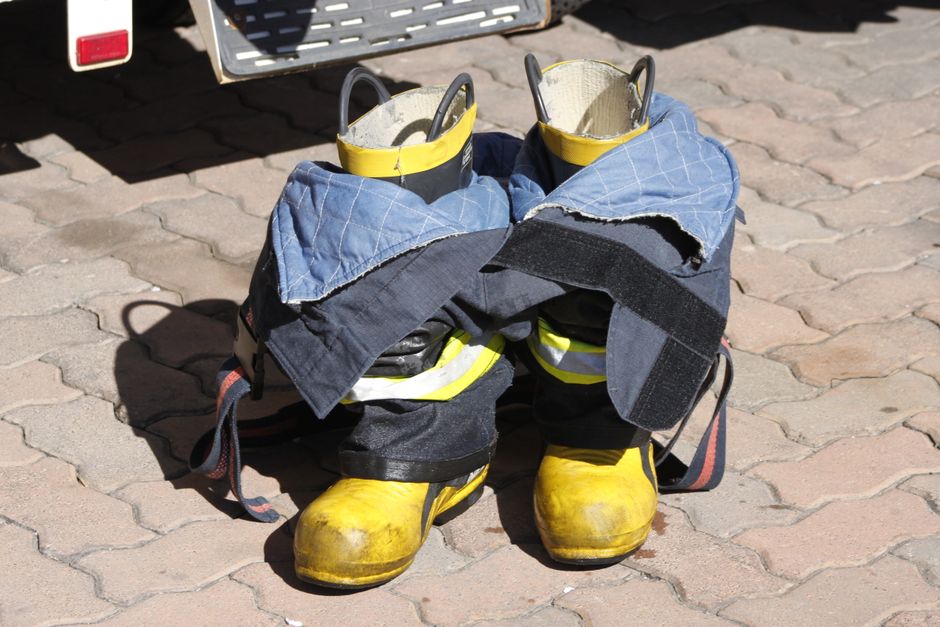
California PPE, a Lakeland Fire + Safety subsidiary, brought the first liquid CO2 turnout gear decontamination system in California online at its Riverside facility in September 2026, now accepting gear from fire departments across the United States. The system pairs CO2 decontamination with California PPE's existing water-based cleaning to create what the company calls DualPhase Clean.
UL-tested results show the combined process removes more than 90 percent of heavy metals and up to 99.9 percent of semi-volatile organic compounds, well above the 50 percent minimum removal standard set by NFPA 1850. Tersus Solutions, which leased the CO2 machine to California PPE under a deal announced in February 2026, says the process can also strip up to 98 percent of polycyclic aromatic hydrocarbons, combustion byproducts linked to long-term cancer risk in firefighters, and reaches contaminants like tar, diesel, and lithium-ion residue that water alone cannot fully remove.
Because gear exits the CO2 process dry, turnaround time back to the firehouse is faster than water-only cleaning, and the process is gentler on hard-to-clean components like helmets, boots, and gloves. California PPE will host an open house at the Riverside facility on October 14, 2026, for any department that wants to see the equipment before shipping gear across state lines.
The take: Every department fighting the PFAS and carcinogen exposure problem has had two options, replace gear or wash it with water and hope. A third-party-tested cleaning process that pulls out measurably more contaminant than the NFPA minimum and ships nationwide gives departments an option that does not require a capital gear-replacement budget to act on this year.
Read the full story at GlobeNewswire →
What We're Watching
LA Wildfire Report Fallout: Watch for California legislature action on communication and ICS mandate legislation in the 2027 session, driven by the report's 266 recommendations.
CAL FIRE Innovation Unit Launch: Watch for FIU's formal January 2027 launch and first technology evaluation cohort, which will set the procurement pathway for vendors selling to the California market.
Integrated SCBA Locators: Watch for early G1 City Edition adopters to publish RIT drill times with and without LUNAR guidance, and whether competing SCBA makers answer with built-in locators of their own.
EV Fire Response Standards: Watch for NFPA's updated EV fire response guidance and whether departments adopt the 24-hour monitoring standard emerging from Missouri and Colorado protocol updates.
Get The Overhaul Brief Every Tuesday
Fire service intelligence delivered to your inbox. Join thousands of fire service leaders who rely on The Overhaul Brief to stay ahead.
Subscribe Free