This week inside the Brief:
- ■Free open-source RMS launches with NERIS built in
- ■Maine data: 47 percent of departments too short-staffed for calls
- ■Medical review ties fireground stress to cardiac death risk
- ■Baltimore OIG finds fire department double-paid vacant shifts
- ■Fire codes miss AI data center battery and cooling hazards
- ■Radius circles badly overstate real response coverage
- ■Charleston GIS model quantifies speed hump response delays

TOOL INNOVATION / SOFTWARE / RECORDS MANAGEMENT
A Free, Open-Source Records System Just Launched With NERIS Built In And No Vendor Lock-In
A new project called Pyra has launched as a free, self-hostable, open-source records management system built specifically to meet the NERIS incident reporting standard that replaced NFIRS nationally. The platform is structured as a nonprofit cooperative rather than a venture-backed company, meaning departments can self-host at no licensing cost or pay only server costs on a hosted tier, with a stated goal that the software can never be acquired, sunset, or marked up by a private equity buyer the way several commercial fire RMS vendors have been in recent years.
The system includes a data importer for legacy NFIRS 5.0 and eNFIRS exports plus Emergency Reporting CSV files, an immutable audit trail logging every record change, and a one-click full database export in open JSON and CSV formats so departments are never locked into the platform. It directly targets the recurring complaint from smaller departments that commercial RMS contracts lock in rising annual fees with no viable exit path.
Pyra's cooperative ownership model is the piece that separates it from prior open-source attempts at fire department software. The nonprofit structure is designed to prevent the acquisition-and-price-hike cycle that has hit multiple commercial RMS vendors in the past decade. Whether a cooperative can sustain the ongoing compliance updates NERIS will keep requiring is the open question, but for departments facing a forced RMS migration under the new reporting mandate, a zero-licensing-cost option with full data portability is now on the table. For volunteer departments, the fit is even sharper: the NERIS mandate applies to them the same as career agencies, but few have budget for commercial RMS licensing or the IT staff to self-host, which makes Pyra's hosted tier, priced at server cost only, the realistic entry point.
The take: This is the first serious open-source challenge to the commercial fire RMS market since NERIS forced every department to migrate systems. Any department facing a contract renewal or new RMS procurement should evaluate Pyra's cooperative model before signing a multi-year vendor lock-in.
Read the full story at Pyra →
STAFFING / RESEARCH / VOLUNTEER FIRE SERVICE
Maine Study Finds 47 Percent Of Departments Were Too Short-Staffed To Answer At Least One Call
A two year study by the University of Maine's Margaret Chase Smith Policy Center and the state Fire Marshal's Office surveyed 219 of Maine's roughly 398 fire departments and interviewed 25 chiefs across 14 counties. It found 47 percent of responding departments had been too short staffed to answer at least one call in the past three years, while call volumes statewide jumped 78 percent over the last decade. Nearly half of surveyed departments reported fleets more than 20 years old, and the average engine price doubled between 2020 and 2026.
The project was funded through FEMA's Building Resilient Infrastructure and Communities program and will feed a full legislative report due in early 2027. Because 94 percent of responding departments rely at least partly on volunteers and 60 percent are entirely volunteer, the findings reflect a structural problem common to rural and small city departments nationwide, not just Maine. Researchers tied turnover directly to lost wages, inflexible employer schedules and training access barriers rather than simple recruitment messaging failures.
The take: This is one of the most rigorous state level data sets on volunteer fire staffing produced in years, and its funding mechanism and methodology are a template other states can copy. Chiefs in rural and suburban departments should use it as ammunition when requesting local funding for apparatus replacement or paid-on-call incentive programs.
Read the full story at Penobscot Bay Pilot →

HEALTH / CARDIAC RISK / RESEARCH
Medical Journal Review Links Fireground Stress Directly To Sudden Cardiac Death Risk
A narrative review published in Clinical Medicine Insights: Cardiology by researchers at the University of Texas Medical Branch synthesized epidemiologic and clinical data to explain why sudden cardiac death remains the leading cause of line of duty firefighter mortality. The review found firefighters show markedly elevated rates of hypertension, obesity, dyslipidemia and metabolic syndrome compared with age matched civilians, and that fire suppression triggers sympathetic activation, hemodynamic stress and circadian disruption that can destabilize existing coronary plaque.
The authors conclude sudden cardiac death in firefighters is not a distinct occupational disease but the collision of baseline cardiometabolic risk with intermittent extreme physiologic stress, meaning early risk identification and guideline directed therapy, not just fitness messaging, should be central to prevention. This academic framing adds clinical weight to NFPA's 2025 fatality data showing heart attacks caused 42 percent of on duty deaths last year, an increase researchers tied partly to expanded reporting windows.
The take: This review gives chiefs and department physicians a citable clinical rationale for funding cardiac screening programs beyond the standard annual physical, especially for volunteer departments where post incident medical monitoring is often absent entirely.
Read the full story at UTMB →
BUDGET / AUDIT / ACCOUNTABILITY
Baltimore OIG Finds Fire Department Double-Paid For Vacant Shifts For Years
The Baltimore City Office of Inspector General released a report on October 14, 2026 finding the city fire department paid more than 30,000 dollars through a decades old practice of covering vacant shifts twice, once through overtime pay and again later through retroactive raises tied to promotions. The department ended the practice in 2025 but the OIG review quantified how much the double payment structure cost taxpayers before the fix.
The finding matters beyond Baltimore because many large metro fire departments still run shift coverage and promotion backpay through separate payroll tracks that were never designed to talk to each other. An inspector general quantifying a specific dollar leak from a structural payroll gap gives chiefs and finance officers a concrete audit template to check their own systems before a similar review finds the same pattern locally.
The take: When promotion backpay and overtime systems are not reconciled, cities can pay twice for the same uncovered shift for years before anyone notices.
Read the full story at the Baltimore Sun →

AI / BUILDING CODES / DATA CENTERS
Fire Codes Written For Servers Do Not Cover The Hazards Inside AI Data Centers
A fire protection engineering analysis published October 18, 2026 argues that NFPA 75 and NFPA 76, the standards governing fire protection in server and telecom rooms, were written before lithium-ion battery backup systems and liquid cooling became standard in AI-focused data centers and do not meaningfully address either hazard. NFPA is fast-tracking NFPA 800, a new battery safety code, through its provisional standard process reserved for urgent life safety issues, and the 2026 edition of NFPA 855 now makes hazard mitigation analysis the default expectation rather than an afterthought for energy storage installations.
The analysis points to a September 2024 lithium-ion battery fire in a Singapore data center battery room that took roughly 36 hours to bring under control as a preview of what responding crews face when a coolant leak and an ignition source can now plausibly coincide in the same hall. For fire departments in the hundreds of U.S. communities now hosting new AI data center construction, the practical problem is that a building can pass every current code inspection and still have a fire hazard profile the inspector never evaluated.
The gap is not hypothetical. AI data center construction is accelerating across dozens of U.S. metro and rural fire jurisdictions, and departments conducting pre-incident planning for these facilities need to know that the fire codes on the books were not written with lithium-ion battery rooms or liquid cooling loops in mind.
The take: Departments responding to new AI data centers in their district should ask whether the facility's fire protection engineer ever evaluated battery rooms and liquid cooling loops separately, because the codes on the books were not written with either in mind.
Read the full story at Vortex Fire →
GIS / OPEN SOURCE / RESPONSE COVERAGE
Research Shows Simple Response Circles Badly Overstate Real Fire Coverage
A location intelligence analysis published October 13, 2026 compared simple radius circles against true drive time isochrones for emergency response coverage around 129 fire stations in King County, Washington. For the median station a circle drawn to match a 10 minute drive time area only overlapped 78 percent of the actual reachable area, and on Vashon Island the overlap dropped to just 27 percent because water and sparse roads blocked direct paths that a circle assumes exist.
Many departments and city planners still use simple radius buffers in public facing coverage maps and station siting discussions because the tooling is familiar, even though open source routing engines like OSRM and Valhalla can compute real drive time isochrones from free OpenStreetMap data at low cost. The gap between circle based and network based coverage estimates is largest exactly where chiefs most need accurate numbers, in areas with water crossings, limited bridges, or disconnected road grids.
The take: A fire department relying on radius circles instead of free open source isochrone tools may be systematically overstating its real coverage in exactly the neighborhoods most likely to need honest numbers.
Read the full story at Wherobots →
GIS / TRAFFIC CALMING / RESPONSE TIME
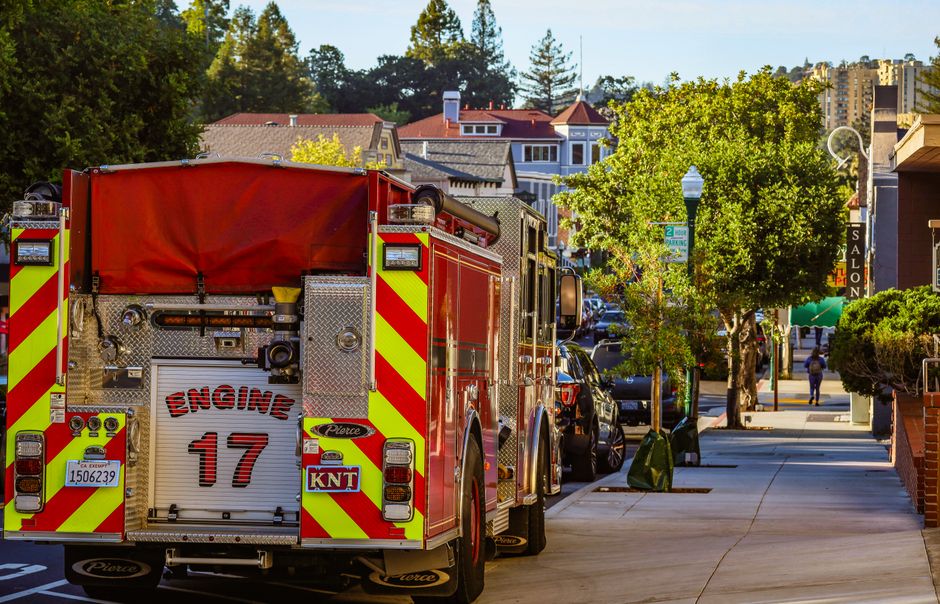
Charleston Uses GIS To Measure Exactly How Much Speed Humps Delay Fire Trucks
Charleston Fire Department and the city's GIS team built a formal review process, detailed in a report published October 13, 2026, that calculates how much each proposed traffic calming speed hump adds to emergency response time before the city approves installation. The system applies a standardized 10 second delay estimate per device along a response route, caps cumulative delay at one minute, and requires travel time to the farthest protected structure stay under five minutes, using Esri Field Maps and ArcGIS Online network routing analysis to model the impact before anything gets built.
The approach directly answers a tension many growing cities face as neighborhood traffic calming requests multiply while fire departments need to preserve fast primary response routes. By turning the fire marshal's office review into a quantified GIS model rather than a case by case judgment call, Charleston created a repeatable standard that other departments can adopt without new software spending, since the routing data feeds directly into existing systems like First Due and mobile data terminals.
The take: Any department facing a wave of neighborhood speed hump requests has an existing model to copy that turns a political argument into a GIS calculation with hard thresholds.
Read the full story at FireRescue1 →
What We're Watching
Pyra RMS Adoption: Watch for the first department to publicly migrate off a commercial RMS to the Pyra cooperative platform, and whether the nonprofit model can keep pace with ongoing NERIS compliance updates.
AI Data Center Codes: Watch for NFPA 800's provisional release timeline and whether fire marshals in data-center-heavy jurisdictions begin requiring hazard mitigation analyses beyond current NFPA 75/76 scope.
World Fire Congress AI Governance: Watch for the first published AI governance position paper from the international working group, expected within 18 months, and whether it becomes an adoptable template for U.S. departments.
NYC Battery Disposal Policy: Watch for whether FDNY and city agencies shift public safety messaging from charging-focused to disposal-focused, and whether other major cities update their own battery fire prevention programs to match the data.
Get The Overhaul Brief Every Tuesday
Fire service intelligence delivered to your inbox. Join thousands of fire service leaders who rely on The Overhaul Brief to stay ahead.
Subscribe Free