AI Robot Firefighting Teams, Wildfire Detection Cameras, and Pierce CAMS Collision Avoidance
Issue 012 - May 19, 2026
Read time: 5 minutes
This week: AI-powered robots that team up to fight fires autonomously, wildfire cameras that beat 911 calls by 45 minutes, and UC Davis launches a $9.7M study tracking firefighter cancer biomarkers after the LA fires. Plus Pierce's collision avoidance system wins a CES Award, Saskatoon goes cloud-native on dispatch, and FDIC 2026 puts AI in the leadership conversation where it belongs.
AI-Powered Robot Teams Learn to Fight Fires Autonomously
Technology
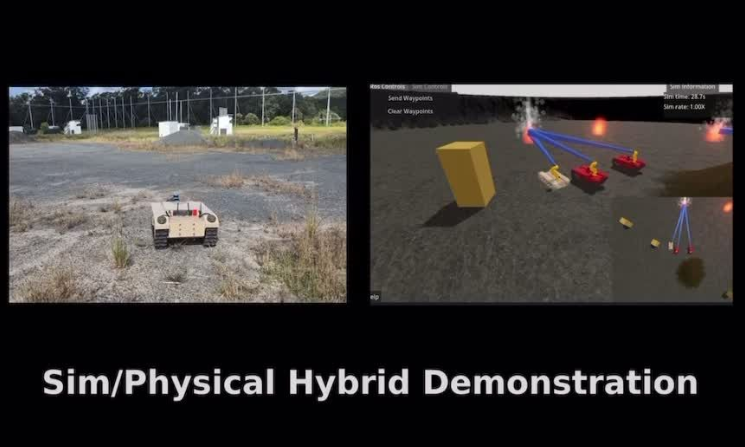
Researchers at Griffith University and Cyborg Dynamics Engineering demonstrated teams of up to five unmanned ground vehicles that can autonomously navigate obstacles, coordinate firefighting efforts, and extinguish multiple fires using multi-agent reinforcement learning. The system achieved a 99.67% success rate in hybrid simulation-physical tests, with robots trained through a three-stage curriculum progressing from single-robot navigation to complex multi-robot firefighting scenarios. The technology, already deployed on Australian mine sites for remote-controlled firefighting, is now evolving toward fully autonomous swarms that can respond to complex situations faster than human operators watching screens.
The take: This is the fire service catching up to what the military and warehousing figured out years ago - robots work better in teams. The jump from remote control to autonomous coordination matters because it shifts the bottleneck from human reaction time to sensor processing speed. For departments, the real question isn't whether this works (it does), it's whether they're ready to train crews to supervise robot teams instead of just operating them. That's a leadership conversation, not a budget line item.
Read the full story at Griffith University →

Western States Deploy AI Cameras That Beat 911 Calls for Wildfire Detection
Technology
Arizona, California, Oregon, and Colorado are rapidly scaling AI-powered wildfire detection cameras, with Arizona Public Service operating 40 cameras (expanding to 71 by summer) and Xcel Energy deploying 126 across seven states. The systems, including Pano AI and ALERTCalifornia networks, combine high-definition feeds, satellite data, and AI monitoring to detect smoke an average of 45 minutes faster than the first 911 call. In March, an AI camera spotted the Diamond Fire in Arizona's Coconino National Forest early enough for crews to contain it at 7 acres. Cal Fire reports starting responses before 911 calls in many cases, and in some instances extinguishing fires without ever receiving a public report.
The take: AI cameras work where eyes aren't - remote, rural, high-risk zones where a fire can run for an hour before anyone notices. The 45-minute head start matters because that's often the difference between a 7-acre containment and a 700-acre disaster. The $50,000 annual cost per camera sounds steep until you price out one helicopter drop or one burned structure. The real win isn't replacing 911, it's filling the gaps where 911 never rings.
Read the full story at US News →
From the team behind The Overhaul Brief
Stop chasing applicants.
Start attracting the right ones.
Your next great firefighter has already scrolled past your recruitment post. Departments using professional video see the difference — applicants who show up already sold on your culture.
We've spent 15+ years on the fireground and made the award-winning docs BURN and BURN X. We don't film departments. We tell the story that makes people want to join yours.
15+ Years
On the fireground
See what your department could look like
UC Davis Launches $9.7M Study on Firefighter Cancer Biomarkers After LA Fires
Health & Safety
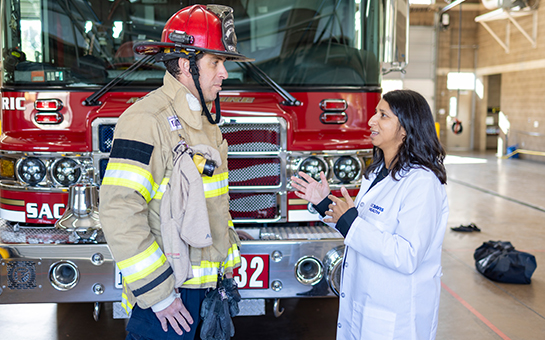
UC Davis Comprehensive Cancer Center and UCLA are leading a two-year study enrolling 3,500 California firefighters to identify how occupational exposures drive cancer risk through biological changes. Funded by CAL FIRE and the UC Office of the President, the Biomarkers of Acute Exposure sub-study will compare firefighters who responded to the 2025 Eaton and Palisades fires in Los Angeles with those who didn't, analyzing heavy metals, epigenetic alterations, inflammation markers, and immune dysfunction. The project builds on the broader California Firefighter Cancer Research Study and includes a firefighter advisory board to ensure real-world relevance.
The take: Cancer research finally has the funding and scale to move past 'firefighters get cancer more' and into 'here's exactly what happens in your body after a working fire.' The LA fires comparison gives researchers a natural experiment - same department, same region, different exposure levels. If they can tie specific biomarkers to specific exposures, departments get a roadmap for targeted decon protocols instead of generic 'wash your gear' advice. This is the science that changes policy.
Read the full story at UC Davis Health →

Pierce CAMS Wins CES Award for AI That Warns Firefighters of Roadside Collisions
Apparatus
Oshkosh Corporation's Collision Avoidance Mitigation System (CAMS), developed by Pratt Miller Motorsports and field-tested on Pierce fire apparatus, won the 2026 CES Picks Award for anticipating collisions when firefighters work inches from traffic on active roadways. The AI-powered system fuses radar with computer vision to detect, classify, and track oncoming vehicles, issuing audible alerts when collision risk emerges based on speed, trajectory, and proximity. After a year of testing with big-city fire departments, Oshkosh is scaling the platform for EMS, police, and tow truck operators, with future enhancements including portable highway units. The system also records continuous video for accident reconstruction and insurance documentation.
The take: Struck-by fatalities on highways are preventable but persistent - firefighters know the risk, but situational awareness has limits when you're focused on a patient or fire. CAMS doesn't stop distracted drivers, it gives crews a few extra seconds to react before impact. The real value isn't the alert, it's the decision time it buys. Scaling to EMS and police makes sense because the hazard is identical, and the video recording solves the insurance nightmare that follows every apparatus collision.
Read the full story at FireRescue1 →
Saskatoon Fire Upgrades to Cloud-Based CAD for Faster, Smarter Dispatch
Operations
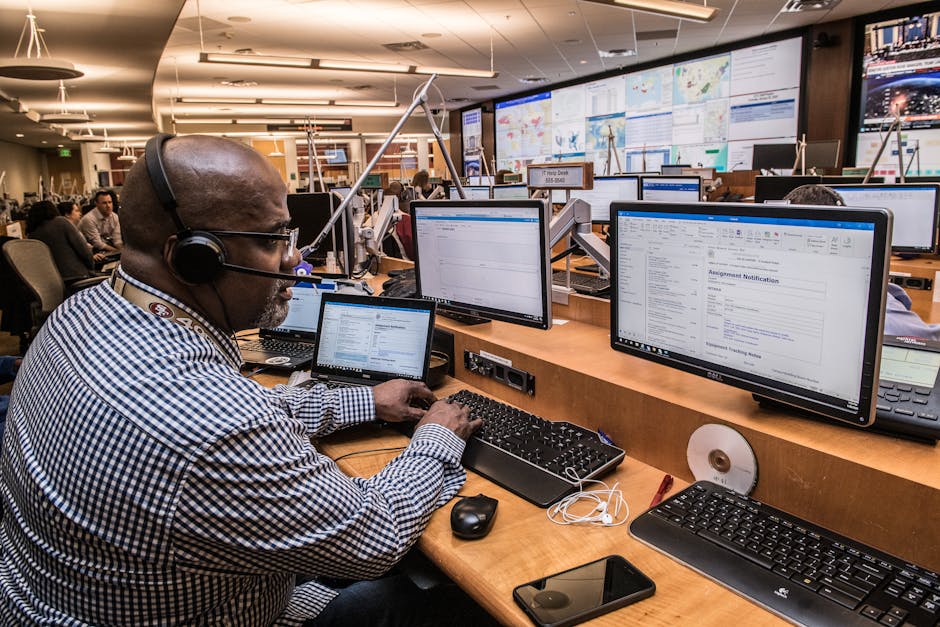
Saskatoon Fire Department replaced its nearly 20-year-old Computer-Aided Dispatch system with cloud-based software that operates over secure internet connections and integrates with the city's NextGen 911 network. The upgrade, launched in March 2026, gives dispatchers GPS-based caller location data in real time, a holistic view of each incident, and the ability to deploy resources from anywhere with network access. Firefighters receive better situational awareness en route and on scene, with real-time incident information pushed to apparatus. Deputy Chief Rob Hogan credits the system with enabling quicker responses and more accurate resource management.
The take: Cloud CAD isn't sexy, but it solves the quiet problem of departments running dispatch software from the Bush administration. The jump from phone-network dispatch to internet-based GPS data matters because it closes the gap between 'we think the caller is here' and 'the caller is exactly here.' Real-time incident updates to apparatus mean crews aren't walking into unknowns - they're arriving with a plan. For departments stuck on legacy systems, this is the playbook: federal mandate forces the phone upgrade, CAD follows because it has to, everyone ends up better off.
Read the full story at CKOM News →
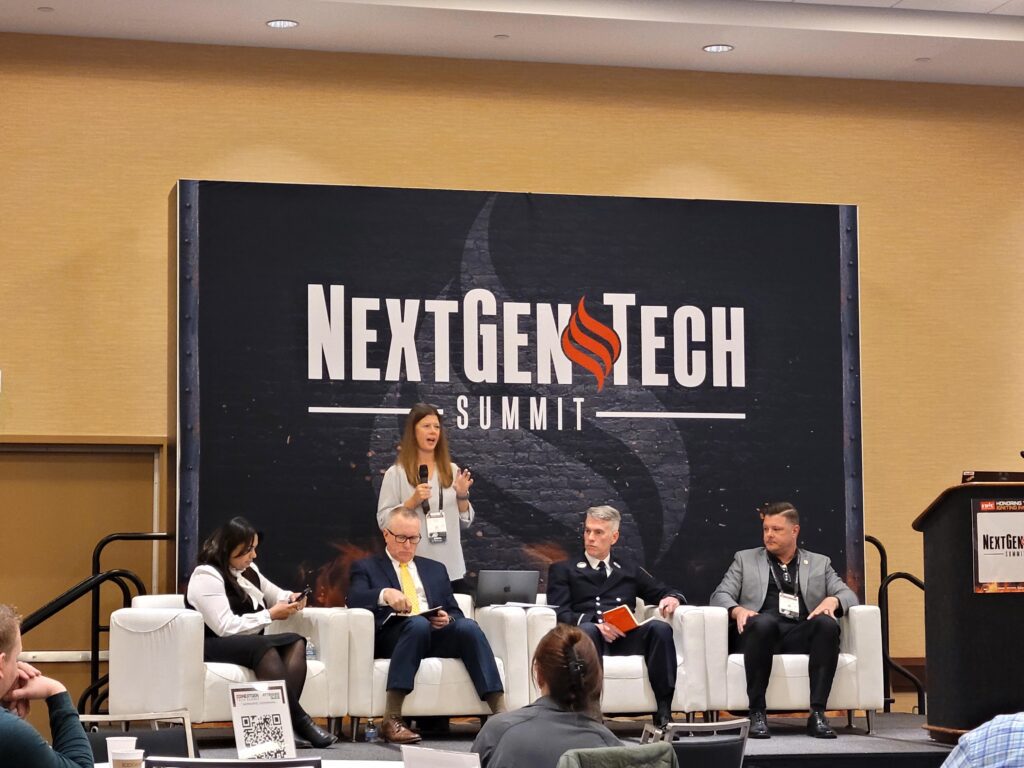
FDIC 2026 NextGen Summit Pushes AI Beyond Admin Into Fireground Operations
Leadership
The two-day NextGen Tech Summit at FDIC 2026 brought chiefs, operators, and technologists together for hands-on sessions with robotics, drones, and VR/AR, paired with deep discussions on AI-driven dispatch, predictive risk modeling, and real-time wearable health monitoring. Former U.S. Fire Administrator Dr. Lori Moore-Merrell keynoted with a message that technology fills capability gaps fire departments can no longer fill with human or financial resources alone, citing low-hanging AI applications like multilingual warnings, grant narratives, and after-action reports. San Bernardino County Fire Chief Dan Munsey emphasized that technology must serve a vision and mission, not the other way around. Multiple sessions focused on getting data to crews in usable formats while en route, with DC Fire/EMS and Esri demonstrating 3D digital twins for pre-incident planning and response optimization.
The take: FDIC stopped treating tech as a vendor-hall sideshow and made it a leadership conversation. The shift from 'should we use AI' to 'how do we use AI to serve our mission' is the maturity the fire service needed three years ago. Moore-Merrell's Formula 1 analogy lands - 200 years of tradition doesn't exempt you from SMART-city conversations, and the departments ignoring that reality are the ones falling behind on response times and resource optimization. The takeaway isn't buy more robots, it's define your gaps first, then pick tools that fill them.
Read the full story at Fire Engineering →
Tool Spotlight
FAA Public Safety Drone Toolkit
The FAA updated its Public Safety Toolkit in March 2026 to help fire departments navigate drone regulations for emergency response, including expedited Special Governmental Interest (SGI) approvals for wildfires, search & rescue, and damage assessment. The toolkit includes flow charts, sample letters, and checklists for securing Part 107 waivers or Part 91 Certificates of Authorization (COA) for beyond-visual-line-of-sight (BVLOS), operations over people (OOP), or operations over moving vehicles (OOMV).
SGI approvals can now be granted in minutes for visual line-of-sight operations during active incidents, with BVLOS requiring a Temporary Flight Restriction (TFR). Fire departments apply through the FAA Aviation Safety Portal or call the System Operations Support Center at 202-267-8276 for time-sensitive needs.
Cost: Free toolkit and approval process
Platform: Online portal + phone support for emergency approvals
Access the Toolkit
Get The Overhaul Brief
Fire service technology, leadership, and innovation. Every Tuesday morning.