Pano AI Eyes Utility Lines, A Robot Dog Hauls a Water Cannon, AR Helmets Reach Carmel
Issue 016 - June 16, 2026
Read time: 8 minutes
This week: Pano AI adds spread forecasting and utility coordination tools, a Chinese-built quadruped robot with an integrated water cannon debuts at INTERSCHUTZ Hannover, and Carmel Indiana firefighters become the first in the Midwest to pilot Qwake's C-THRU augmented reality helmets. Plus NFPA 1700 ships its 2026 edition with a brand-new Chapter 13 on search and rescue, FEMA opens $324M in SAFER recruitment grants with a June 22 deadline, and a Reno research team maps wildfire ash plumes the way meteorologists map weather.
Wildfire AI
Pano AI Adds Spread Forecasting And Utility Coordination Tools
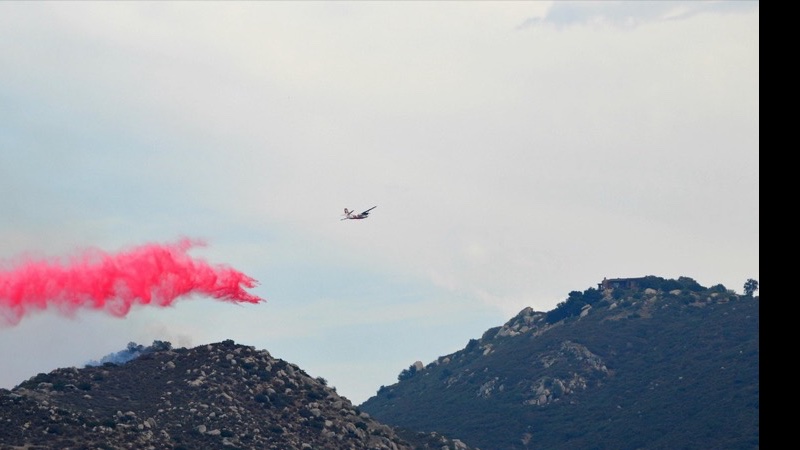
On June 3 at EEI 2026 in Las Vegas, Pano AI announced its biggest platform expansion since launch: integration with Technosylva for fire-behavior prediction, Time to Arrival estimates, lightning workflows, and shared Operations Center Views that let utilities and emergency managers work off the same screen. The platform now covers more than 50 million acres and was the first known alert on more than half of the 735 vegetation fires it flagged in 2025. The expansion comes as federal forecasters expect above-normal fire activity across much of the West this summer.
The take: Earlier detection is table stakes now. The new layer is spread forecasting baked into the same interface, which closes the gap between "we see smoke" and "here is where it will be in 30 minutes." Utilities in high-risk corridors get the most immediate value, but emergency managers downstream finally get a shared common operating picture.
Quadruped Firefighting Robot Debuts At INTERSCHUTZ With Built-In Water Cannon
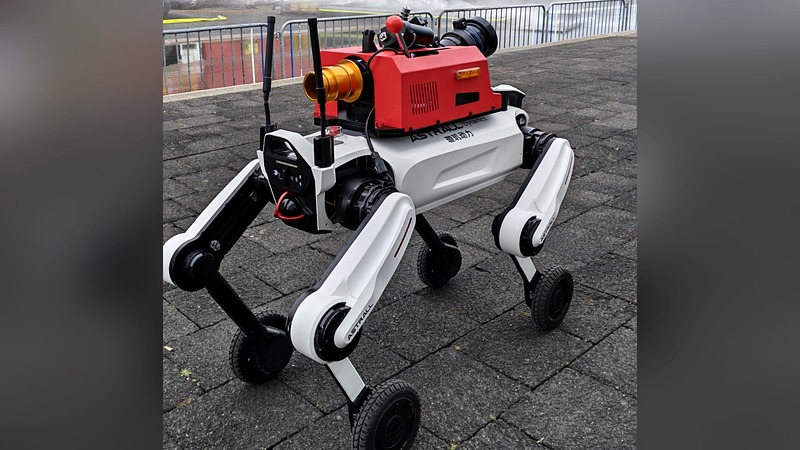
On June 7 at INTERSCHUTZ 2026 in Hannover, Shenzhen-based Astrall Dynamics unveiled the Hypertron-T01, a heavy-duty quadruped robot with an integrated high-pressure water cannon. The unit handles an 80kg payload, delivers 20 liters per second of water at up to 60 meters with a 120-degree projection arc, and can drag full-weight supply hoses through debris while climbing 45-degree inclines. IP67 rated. Eight-hour battery. Thermal imaging, gas detection, and 3D LiDAR onboard. All operations are remote. Astrall has completed bulk delivery to China Southern Power Grid and is opening international orders.
The take: Most quadruped robots in fire service press are reconnaissance platforms with cameras and sensors strapped to a Spot. The Hypertron is the first credible attempt at a robot dog that actually fights the fire. 20 L/s is real water - enough to put a sustained line on a hot compartment while crews stay out. The procurement question for US departments is the Chinese ownership angle: any agency taking federal grant money will run into the same NDAA-style compliance friction flagged for drones.
Carmel IN Becomes First Midwest Department To Pilot Qwake AR Helmets
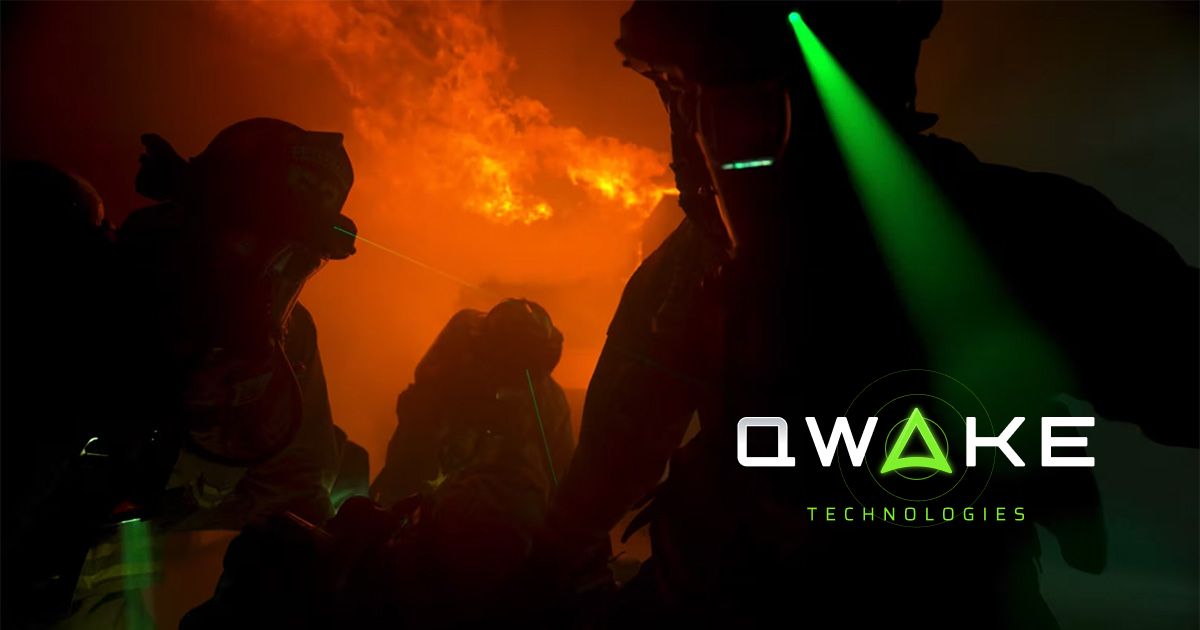
The Carmel Fire Department will deploy 16 Qwake Technologies C-THRU augmented reality helmets and four command tablets starting mid-summer, joining nine other US departments in a national pilot of a system developed over a decade through a $10 million DHS Science and Technology Directorate contract. The three-year program costs roughly $375,000 and is funded in part by the local Heroes Club. C-THRU mounts a head-up display to a standard helmet, wireframes room geometry in real time, overlays thermal outlines of people and exits, and streams live video to incident command. Chief Joel Thacker told Axios search times in their demo runs were cut roughly in half.
The take: The point is not the headset - thermal imagers have been on helmets for years. The point is that the IC stops asking "what do you see?" over the radio and starts watching it directly. That changes how primary search gets coordinated and how mayday decisions get made. If Carmel's search-time numbers hold up across a real workload, expect AFG applications to start asking for C-THRU by name in 2027.
Stop chasing applicants. Start attracting the right ones.
Your next great firefighter has already scrolled past your recruitment post. Departments using professional video see the difference — applicants who show up already sold on your culture.
We've spent 15+ years on the fireground and made the award-winning docs BURN and BURN X. We don't film departments. We tell the story that makes people want to join yours.
NFPA 1700 Drops 2026 Edition With Brand-New Chapter 13 On Search And Rescue
The 2026 edition of NFPA 1700 ships with an entirely new Chapter 13 dedicated to tactical considerations for search and rescue, built on UL Fire Safety Research Institute full-scale residential burn experiments. FSRI's three new TCs cover gaps earlier guidance did not address. TC 10 says when fire has self-vented to the exterior and resources allow, simultaneous interior and exterior streams measurably improve interior conditions and victim survivability. TC 11 says compartments remote from the fire should be locally ventilated as soon as feasible because distance from the fire does not equal safety. TC 12 says hydraulic ventilation immediately post-suppression accelerates the removal of combustion gases. FSRI has rebuilt its free Search and Rescue Tactics online course around the new TCs.
The take: This is the most consequential structural firefighting standards update in years and it is mostly about doors, windows, and timing - not gear. The biggest cultural shift is the explicit endorsement of simultaneous exterior and interior streams in post-flashover conditions. That contradicts how a lot of officers were trained twenty years ago. NFPA 1700 is also moving toward being treated as a standard of care in litigation, so the SOG copy in the binder needs to match Chapter 13 sooner rather than later.
FEMA SAFER Window Closes June 22 With $324M For Hiring And Recruiting
The FY2025 SAFER application window opened May 19 and closes June 22, 2026 at 5 p.m. ET. The $324 million program funds both career firefighter hiring and volunteer recruitment and retention activities. Volunteer recruitment projects require no local match, and eligible costs include marketing, basic training, leadership development, and PPE for new recruits. Award announcements are expected by September 30.
The take: Five weeks of application window is brutal if you are starting from scratch. Departments that already have a SAM.gov registration, an active FEMA GO login, and a draft recruitment plan in a drawer can still file. If you are reading this on June 16 you have six business days. Volunteer departments leave money on the table every year because the application looks intimidating - this one is the most forgiving SAFER category.
Reno Researchers Map Wildfire Ash Plumes The Way Meteorologists Map Weather
Researchers at the University of Nevada, Reno and Utah State University published the first methodology for calculating and predicting where wildfire-emitted particles land downstream after fires. Using the 2021 Caldor Fire that hit Lake Tahoe as the test case, the team led by Facundo Scordo at the Tahoe Institute for Global Sustainability found that ash depositions within 10 kilometers of the fire were comparable to ashfall from a moderate volcanic eruption. The work appears in Communications Earth and Environment, a Nature Portfolio journal.
The take: This is the kind of research that does not show up in your trade feeds until water utilities and public health departments start asking questions you cannot answer. When the next wildland-urban interface fire burns near a drinking water source, expect the calls about smoke deposition. The Reno methodology gives incident commanders and PIOs a frame for talking about downstream effects without guessing. Tahoe and Reno crews already know this conversation - now it is portable.
FEMA GO is the federal grant submission portal for SAFER, AFG, and Fire Prevention and Safety grants. If your department is not registered with an active Authorized Organizational Representative, you cannot submit a SAFER application before the June 22 deadline.
Most volunteer departments only discover this when they sit down to submit and realize the AOR role takes 5 business days to provision. Register today even if you are not applying this cycle - the next AFG window opens in September and the same login works.
Cost: Free (federal portal)
For: Career and volunteer department grant applicants
California's insurance-linked defensible space rules - Three California carriers have started linking premium discounts to defensible space photo verification. Expect this to spread to Colorado and Oregon by 2027 and to put new homeowner-facing demands on local prevention officers.
FAA Part 108 beyond-line-of-sight final rule - The FAA's BVLOS final rule for drone operations is expected this summer. When it lands, every public safety drone program with current waivers gets a longer planning horizon and a lot more pressure to formalize operations.
Wildfire smoke as an indoor air quality problem - EPA is reportedly drafting new indoor air quality guidance specifically for wildfire smoke events. Fire prevention divisions will likely inherit a chunk of the public-facing education load.