This week: a California department tests a firefighting system that uses sound waves instead of water, the first satellite constellation built specifically to detect wildfires reaches orbit, and Cornell's wearable "Smart Firegear" sensors aim to predict firefighter heat stress before it becomes injury. Plus a new suppression agent built to stop lithium-ion battery fires from the inside, an AI that listens to your fireground radio traffic and runs the command board for you, and the wearable 12-lead ECG that goes on in 30 seconds and rides with the patient all the way to the cath lab.
SUPPRESSION · NEW TECH · R&D
A California Department Is Testing a System That Puts Out Fire With Sound Waves, Not Water
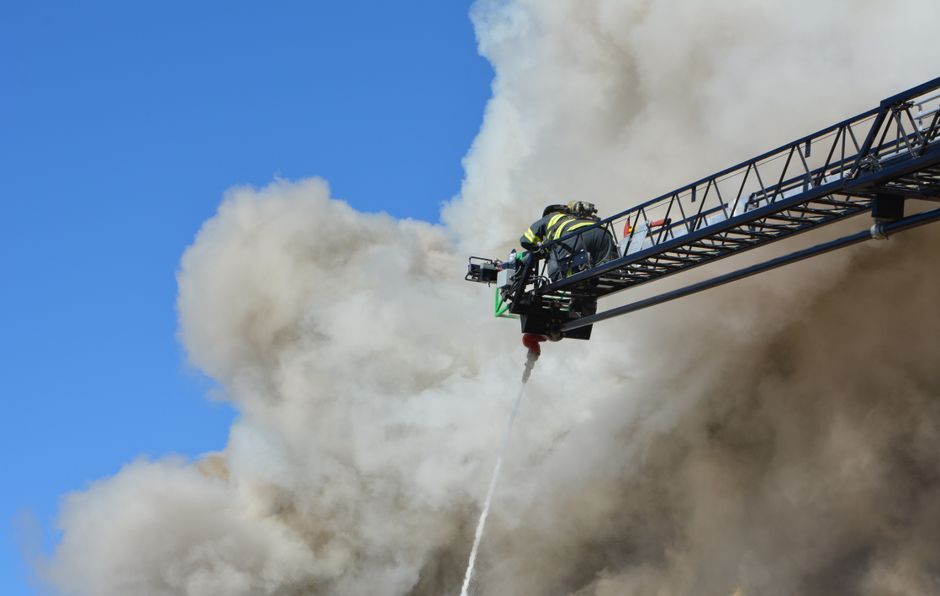
The San Bernardino County Fire Department has been evaluating a firefighting system that uses no water and no chemicals at all. Developed by a company called Sonic Fire Tech, the system uses infrared sensors to detect a fire and then directs low-frequency sound waves at the flames. The acoustic energy disrupts the boundary layer between the burning fuel and the surrounding oxygen, effectively separating the flame from the air feeding it. The approach traces back to research funded by NASA and DARPA a decade ago, but only recently reached a fieldable, backpack-scale prototype.
The pitch is not that sound replaces the hoseline on a working structure fire. It is that a portable, water-free tool could knock down incipient fires, protect a defensible space, or reach spots where water damage or conductivity is a problem - electrical fires, server rooms, engine compartments. Because there is nothing to refill and nothing to clean up, the developers are positioning it for early-stage intervention and for departments watching their water supply. The company has been demonstrating the system to fire agencies rather than selling a finished product, and independent validation is still ahead of it.
The take: Treat this as a technology to watch, not to buy - the physics is real but the operational envelope is narrow, and nobody is putting out a fully involved room with a subwoofer. The interesting question for chiefs is the niche: a water-free knockdown tool for electrical and equipment fires, where a conventional stream causes as many problems as it solves. If it survives independent testing, that is where it lands first.
Read the full story at FireRescue1 →
WILDFIRE · SATELLITES · DETECTION
The First Satellites Built Purpose-Made to Detect Wildfires Just Reached Orbit
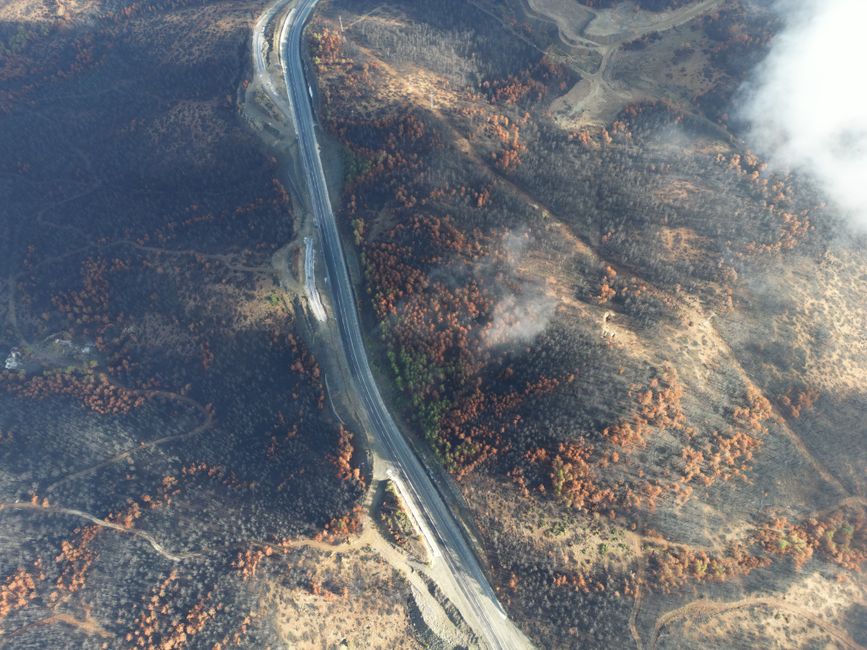
Three operational satellites for the Earth Fire Alliance's FireSat constellation launched July 7, 2026 aboard a SpaceX Transporter mission from Vandenberg Space Force Base. Built by Muon Space, each satellite carries a six-channel multispectral infrared payload capable of detecting fires as small as five-by-five meters and seeing through smoke and clouds. The three satellites provide at least twice-daily revisit across every fire-prone region on Earth - backed by over $69 million from Google, the Bezos Earth Fund, and the Gordon and Betty Moore Foundation.
FireSat is the first satellite constellation purpose-built for wildfire detection. Existing systems like MODIS miss small ignitions and have long revisit cycles; FireSat's architecture will expand toward hourly global revisit by 2029 and a full 50-satellite constellation by 2030. California's CAL FIRE is already a partner, and the Los Angeles Times reported the satellites can distinguish low-intensity smoldering fires from high-intensity blazes - something no existing operational satellite does.
The take: This is the most significant change to wildfire early warning infrastructure in a generation - chiefs in California, Oregon, and the Mountain West should be tracking integration timelines with CAL FIRE and their state OES counterparts now. Earlier ignition alerts mean earlier resource deployment before a fire becomes a campaign-level event.
Read the full story at the Los Angeles Times →
SAFETY · WEARABLES · HEAT STRESS
Cornell's "Smart Firegear" Sensors Aim to Predict Heat Stress Before It Becomes Injury
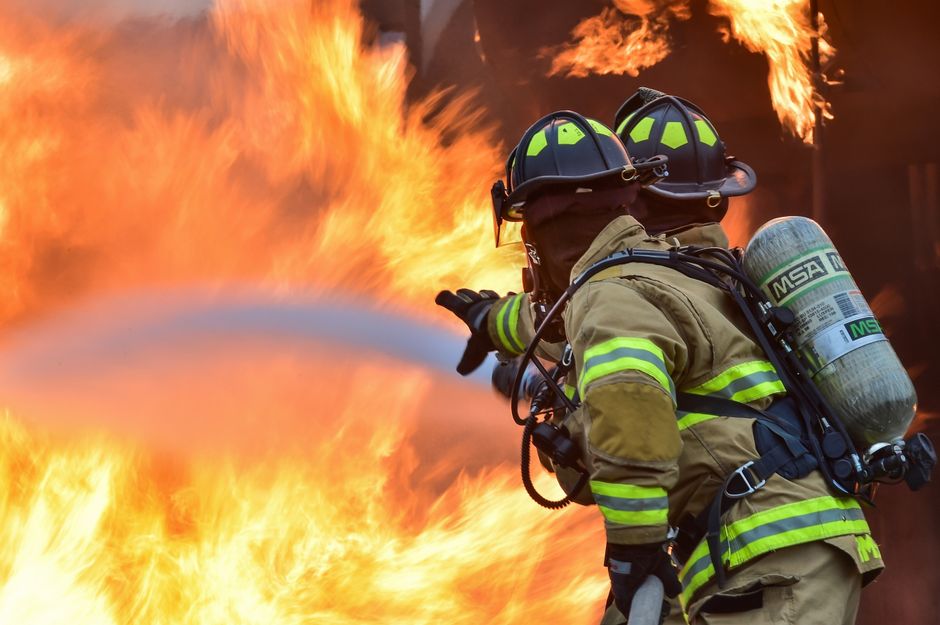
A Cornell University-led research team has built a non-invasive wearable sensor system designed to flag dangerous firefighter heat stress before it turns into injury. The system reads heart rate, skin temperature, and near-skin ambient temperature, then feeds those signals into a regression model that predicts a firefighter's core body temperature - the true danger metric that has historically been impractical to measure in the field. The team tested the setup on a sweating thermal manikin under simulated 35C firefighting conditions.
The project, run through Cornell Cooperative Extension and the College of Agriculture and Life Sciences, gathered field feedback from the New York State Academy of Fire Science and working fire departments, and shared design recommendations with the IAFF and Fire Engineering. Heat stress and cardiac events remain a leading cause of firefighter line-of-duty deaths, and core-temperature monitoring has long been the missing piece - a wearable that predicts it in real time could change how crews are rotated and rehabbed on the fireground.
The take: The value here is the prediction, not the measurement - if a wrist-and-chest sensor package can forecast core temperature accurately enough to pull a firefighter before collapse, it becomes a rehab and crew-rotation decision tool, not just a data logger. Chiefs should watch whether this moves from thermal-manikin validation to a fieldable device, and whether IAFF backing pushes it toward a standard.
Read the full story at Cornell CALS →
SUPPRESSION · LITHIUM-ION · EV FIRES
A New Agent Built to Stop Lithium-Ion Battery Fires From the Inside
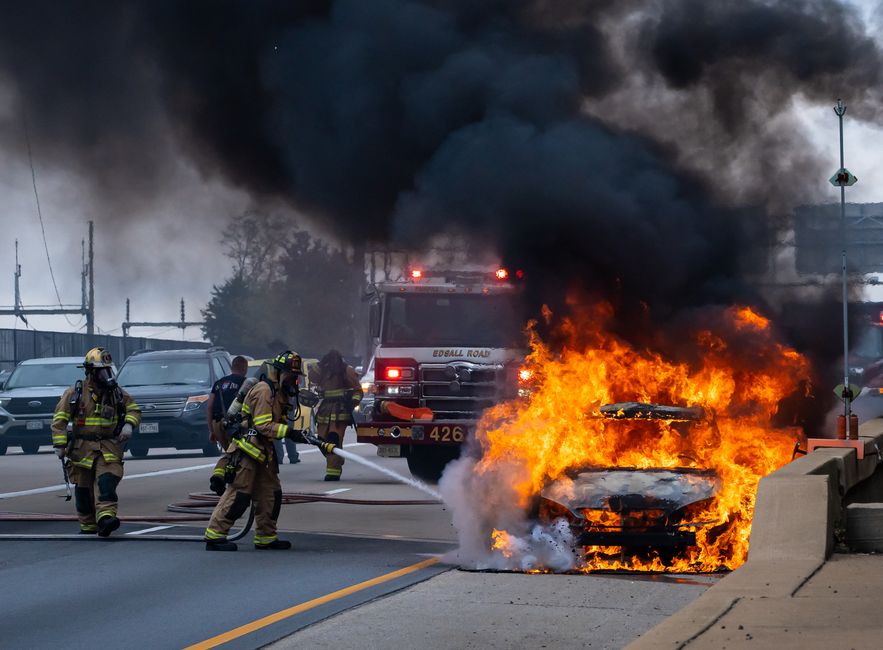
Lithium-ion battery fires are the suppression problem the fire service keeps running into and keeps not solving. Once a cell enters thermal runaway, it generates its own heat and oxygen internally, which is why an EV or energy-storage fire can reignite hours or even days after crews think it is out, and why departments have resorted to dunking cars in dumpsters full of water. A domestically developed agent called FCL-X, from Full Circle Lithium in partnership with US Fire Pump, is built specifically for that failure mode rather than for open flame.
Rather than just cooling the outside of a pack the way plain water does, FCL-X is formulated to interrupt the chemical chain reaction driving thermal runaway and to keep it from propagating cell to cell. That is the whole game with battery fires: stopping the cascade before it walks through the entire pack. The agent has been used on a recycling-facility fire and is being positioned for EVs, battery energy storage systems, and the growing pile of e-bike, scooter, and consumer-electronics fires that now show up on ordinary residential runs.
The take: Every department is going to run more of these, not fewer, and the honest answer on battery fires today is still "use a lot of water and wait." An agent engineered for the actual chemistry of thermal runaway is worth watching closely - the questions to ask a vendor are reignition rate, water volume compared to your current approach, and whether it has been tested on a full pack rather than a single burning cell.
Read the full story at Fire Apparatus & Emergency Equipment →
AI · INCIDENT COMMAND · SOFTWARE
An AI That Listens to Your Radio Traffic and Runs the Command Board for You
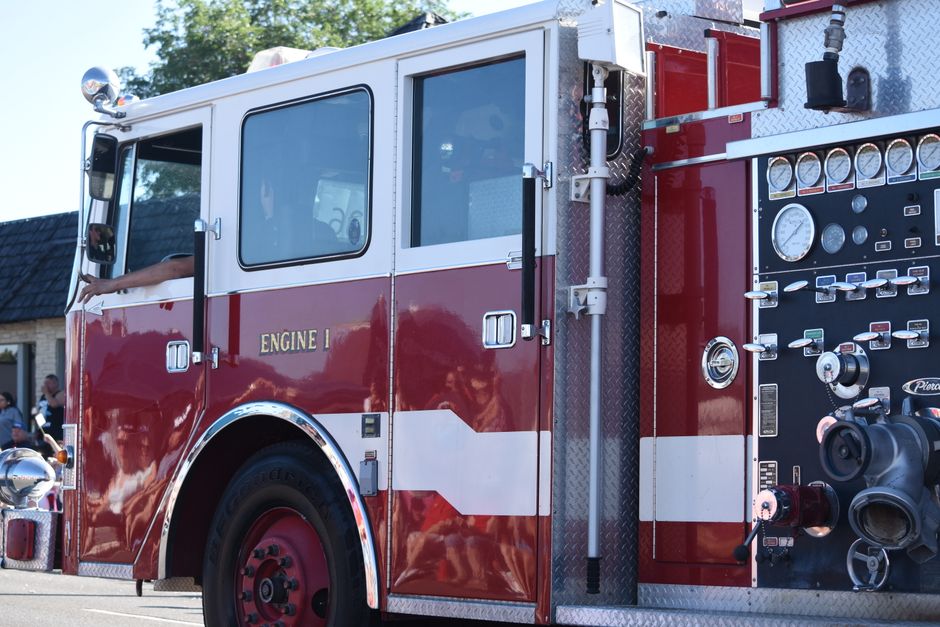
A platform called STAR-IQ, part of InTech Technologies' Fluid-IQ system, aims at one of the hardest jobs on the fireground: keeping the command board current while everything is moving. The tool runs an AI in the background that listens to all the radio traffic, knows the department's standard operating guidelines, and knows the building and environment, then updates the command board automatically based on what is actually being said and done - instead of the IC writing on a grease-pencil board while trying to run the incident.
Beyond the board, the system builds the org chart and a communications plan, distributes an action plan, and tracks the commander's decisions on a live timeline so the whole scene can see the same picture in real time. The design intent is to guard against the recurring killers of firefighter safety - lost accountability, missed benchmarks, and a command picture that drifts out of date the moment the incident gets busy. It is a different bet than another mapping app: put the AI next to the commander and let it do the documentation so the human can command.
The take: The value here is offloading the bookkeeping, not replacing the commander. If an AI can keep an accurate, shareable command board and timeline without a chief looking down to write it, that is a real accountability and after-action win - the open questions are how it handles messy or stepped-on radio traffic, and whether it holds up when the incident is loud, fast, and nothing goes to plan.
Watch the STAR-IQ fireground demo →
EMS · CARDIAC · NEW DEVICE
The 12-Lead ECG That Ditches the Ten-Cord Tangle and Goes On in 30 Seconds
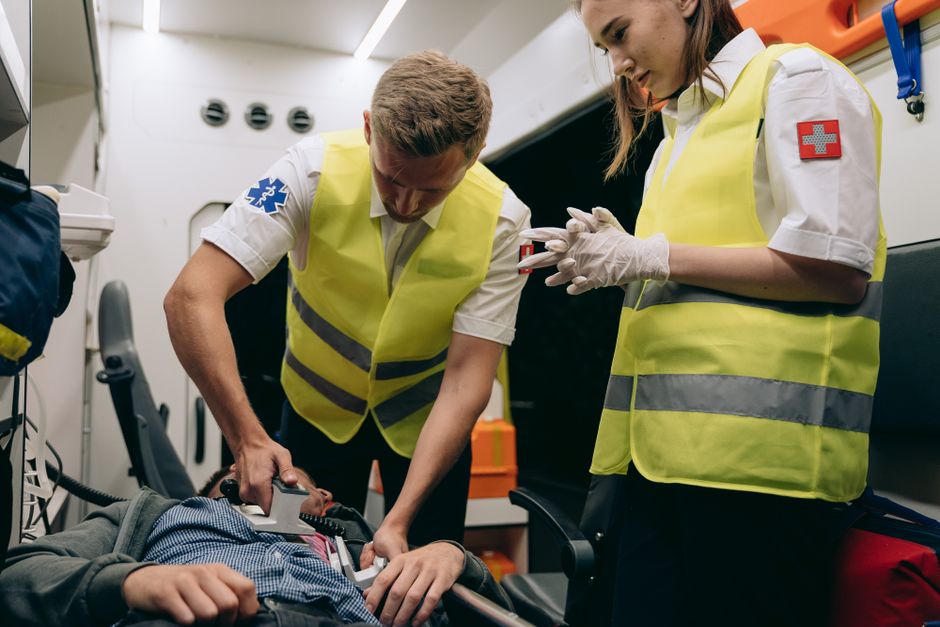
A wearable 12-lead ECG platform called EXG, from C-Booth Innovations, replaces the familiar mess of ten individual electrodes and their cords with a single connection point that goes on in 20 to 30 seconds instead of three to five minutes. It was designed by emergency physicians around the way EMS actually works: anatomical markers guide correct placement every time, it tolerates both manual and mechanical CPR so a crew can capture a clean post-ROSC 12-lead in seconds, and it stays on the patient - validated for up to 72 hours of wear - so nobody has to rewire in the ED.
The single cable connects to the monitors departments already run, from Zoll and Stryker in the field to the hospital's systems, and the same wearable rides with the patient from the rig through the ED and into the cath lab without a new acquisition at each handoff. Oak Forest, Illinois became the first department in that state to field it, and the platform is now reported in use across nine states. The pitch is speed and consistency: shave minutes off ECG acquisition, cut placement errors, and keep continuous monitoring through patient movement when every minute of a STEMI counts.
The take: For any department running EMS, the two places this earns its keep are cardiac arrest and STEMI - a lead set that survives CPR and re-acquires in seconds after ROSC, plus consistent placement that reduces the false cath-lab activations bad lead position causes. Worth a look at your next monitor refresh; the questions are single-use cost per call and whether it truly plays nice with the monitors you already own.
Read more about the EXG platform at C-Booth Innovations →
WHAT WE'RE WATCHING
Whether the sound-wave suppression system survives independent testing and finds its niche - a water-free knockdown tool for electrical and equipment fires is a real gap, but the physics has to hold up outside a vendor demo before any chief writes a purchase order.
How fast CAL FIRE and state emergency management agencies operationalize the FireSat feed - the detection capability is now in orbit, but the value depends entirely on whether the alert pipeline reaches incident commanders in time to change deployment.
Whether AI-in-the-loop tools like STAR-IQ actually reduce the command-and-accountability failures they target, or just add a screen - the next year of real fireground use, not the demo reel, will tell.